





The Translator — Who Wears Contrast to Make Sense of Themselves
Archetypes & Human Patterns of navigating inner multiplicity.
She doesn't choose the ring for the garnet or the peridot. She chooses it for the line between them. At the party, while others are discussing their clear career paths or singular passions, her thumb is quietly tracing that sharp ridge on her finger, feeling where red becomes green. She's not bored. She's listening—to them, and to the quiet fact of duality under her touch. When someone asks what she does, she gives one answer, but her mind holds three others, all equally true. She's not being deceptive. She's just aware that language forces sequence, while experience happens in layers. What kind of person would understand this immediately? The Translator would. Not because they speak languages, but because they live in the spaces between them.
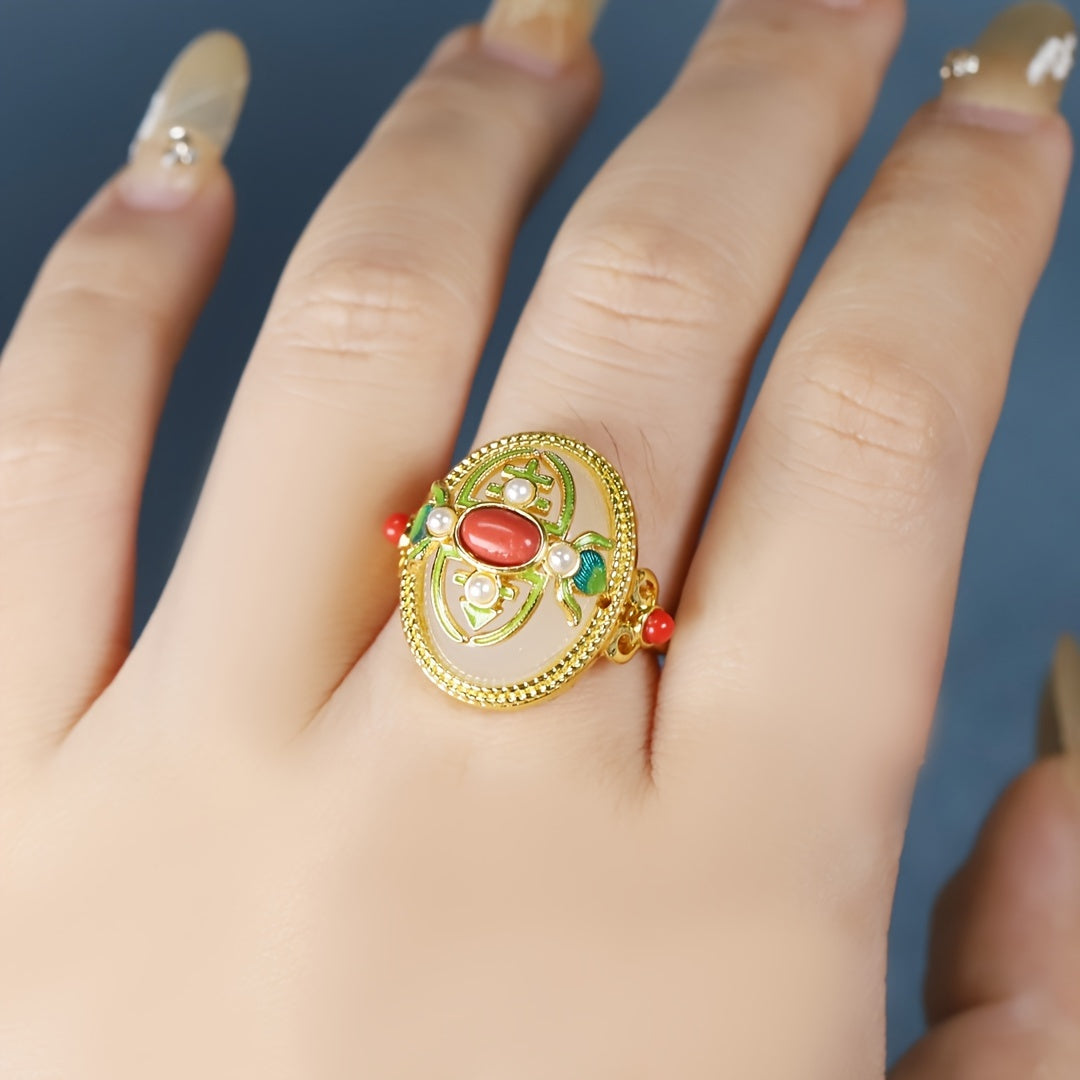
The tactile boundary: where one state meets another.
The Translator archetype isn't confused. That's the first thing to understand. They're not wandering lost between identities; they're actively navigating a landscape that has more than one climate. They might be an artist with an MBA. A scientist who writes poetry. A parent who also runs a company. Or simply someone who feels deeply introverted in some settings and surprisingly social in others. Their inner world isn't chaotic—it's complex, with distinct territories that don't always speak the same language.
For the Translator, a piece like this ring isn't decoration. It's a diplomatic object. It represents a treaty between different parts of the self. The warm, continuous gold band is the neutral territory, the common ground. The divided stones are the distinct parties: the passionate, deep-feeling self (garnet) and the clear, analytical self (peridot). They don't have to merge. They just have to coexist within the same defined space. The clean line between them isn't a wall; it's a border crossing. The Translator knows how to cross back and forth.
The Pattern of Recognition
You might recognize this pattern in decision-making. When faced with a choice, the Translator doesn't just weigh pros and cons. They listen to different internal "delegates." The delegate from the heart speaks in red tones: desire, fear, longing. The delegate from the head speaks in green tones: logic, practicality, consequence. The Translator's job isn't to choose one voice, but to host the conversation until a path forward emerges that respects both.
This can look like hesitation from the outside. But inside, it's deep processing. They're not stuck; they're translating. Translating emotional data into actionable plans. Translating abstract ideas into felt experience. Translating social expectations into personal truth. Am I trying to become someone, or acknowledge who I am? For the Translator, this question isn't philosophical—it's the daily work of self-governance.
In relationships, Translators are often the peacemakers, not because they avoid conflict, but because they can genuinely understand multiple perspectives. They don't just see "your side" and "my side." They see the landscape between, the shared territory, the points where translation is possible. This can be exhausting. It requires constant code-switching, constant attention to context. The ring, with its clear visual and tactile boundary, can become a private reminder that it's okay to have sides. That having sides doesn't make you fractured; it makes you nuanced.
The Translator's Tools: Boundaries as Bridges
What distinguishes the Translator from someone who's simply indecisive or lost? Tools. The Translator develops internal tools. One of the most important is the ability to create functional boundaries—not walls that isolate, but membranes that allow selective exchange.
They might have rituals: taking five minutes alone between work and home to "switch modes." They might use objects: a specific playlist for creative work, a different scent for analytical tasks. Or, they might wear a ring like this one. The physical object becomes an external representation of an internal boundary. Feeling the line between garnet and peridot can be a cue: "Right now, I need to think clearly (green). Later, I can feel deeply (red)." The boundary isn't rigid; it's a tool for focus.
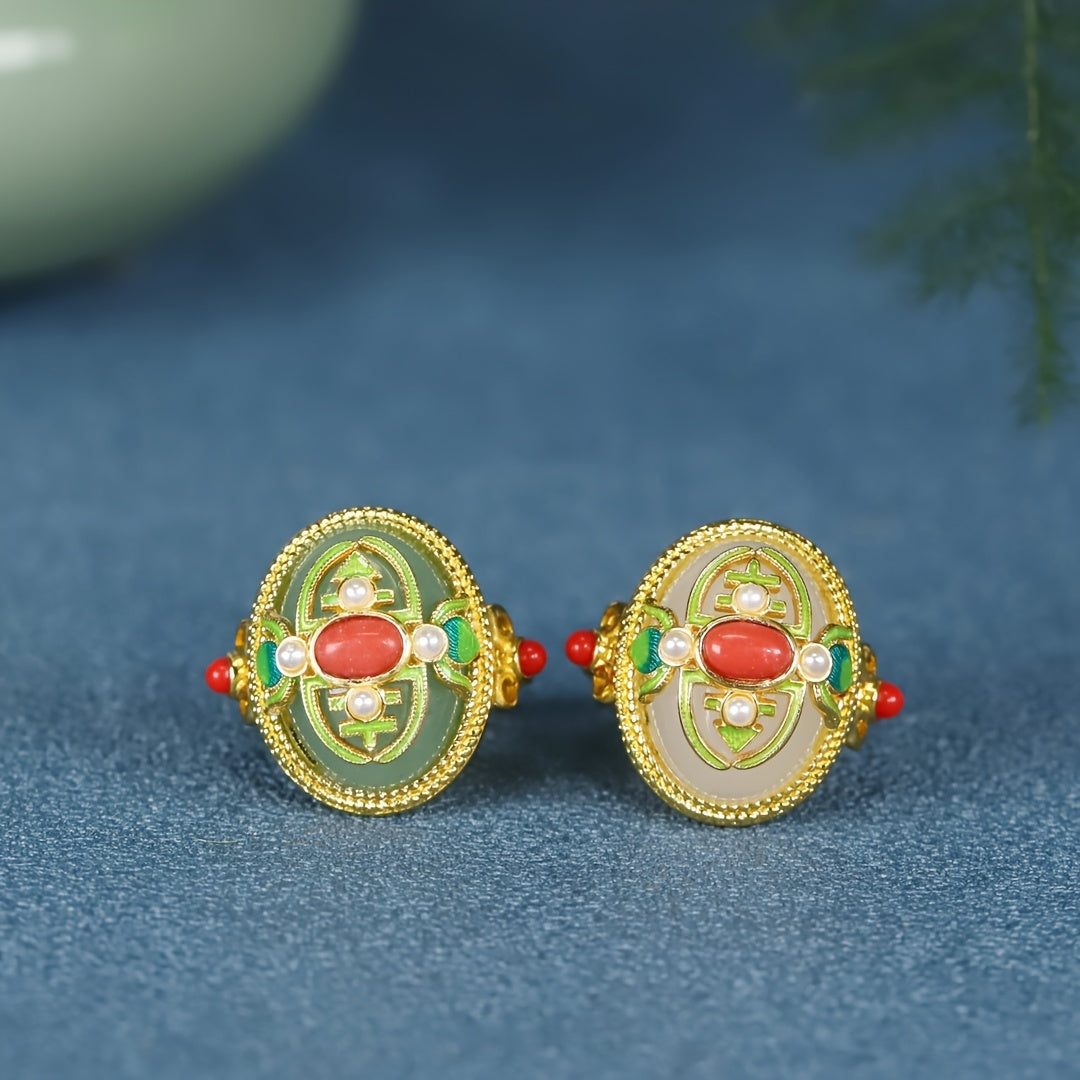
An object marking a threshold between states of mind.
This archetype often emerges in people who grew up bridging different worlds—cultural, social, or familial. They learned early that to survive, they had to understand multiple codes of conduct. This wasn't a choice; it was a necessity. As adults, this skill becomes a superpower, but also a source of fatigue. The ring can serve as a tiny, wearable permission slip: "You don't have to translate right now. You can just be here, in this single moment, with both colors present but quiet."
Wearing the ring daily, they might notice something: they touch it most during transitions. Between meetings. Before difficult conversations. After saying goodbye. These are the moments when the internal translators are working hardest, and the physical object becomes a touchstone—a reminder that the work of holding complexity is honorable, and that they have done it before, and can do it again.
The Shadow Side: When Translation Fails
Every archetype has a shadow. For the Translator, it's exhaustion and lost core. When you're constantly mediating between different parts of yourself, you can forget what you sound like when you're not translating. You can become so good at code-switching that you lose your native tongue. The fear isn't of being inauthentic—it's of having no "authentic" self to return to, just a collection of well-practiced roles.
This is where the ring's design offers a subtle correction. Notice: the stones don't blur into each other. The line is sharp. The garnet remains fully garnet; the peridot remains fully peridot. Their integrity is maintained. The Translator's health depends on this same principle: maintaining the integrity of each internal "part" while facilitating communication between them. You don't have to dilute your passion to be logical. You don't have to numb your feelings to be professional. You can be both, distinctly, at different times, or even in different measures at the same time.
The shadow also manifests as isolation. When you're always seeing multiple sides, it can be hard to fully commit to one. Relationships might feel superficial because you're always partially translating yourself, holding back the parts that don't fit the context. The ring, worn privately, can be a companion in that solitude—a small acknowledgment that your inner world is rich and multi-hued, even if you choose to show only one color at a time.
Modern Relevance: The Age of the Portfolio Self
We live in the age of the "portfolio self." We're no longer expected to have one job, one identity, one story. We have side hustles, personal brands, digital avatars, and real-world roles that might conflict. This environment is both paradise and purgatory for the Translator. Paradise because multiplicity is now socially accepted. Purgatory because the pressure to seamlessly integrate all these selves is immense.
In this context, the Translator archetype isn't a pathology; it's a necessary adaptation. The skills of code-switching, perspective-taking, and holding contradictory truths are survival skills. The person drawn to this ring might be unconsciously seeking a tool for that survival—not a magical fix, but a physical anchor for the dizzying work of self-integration.
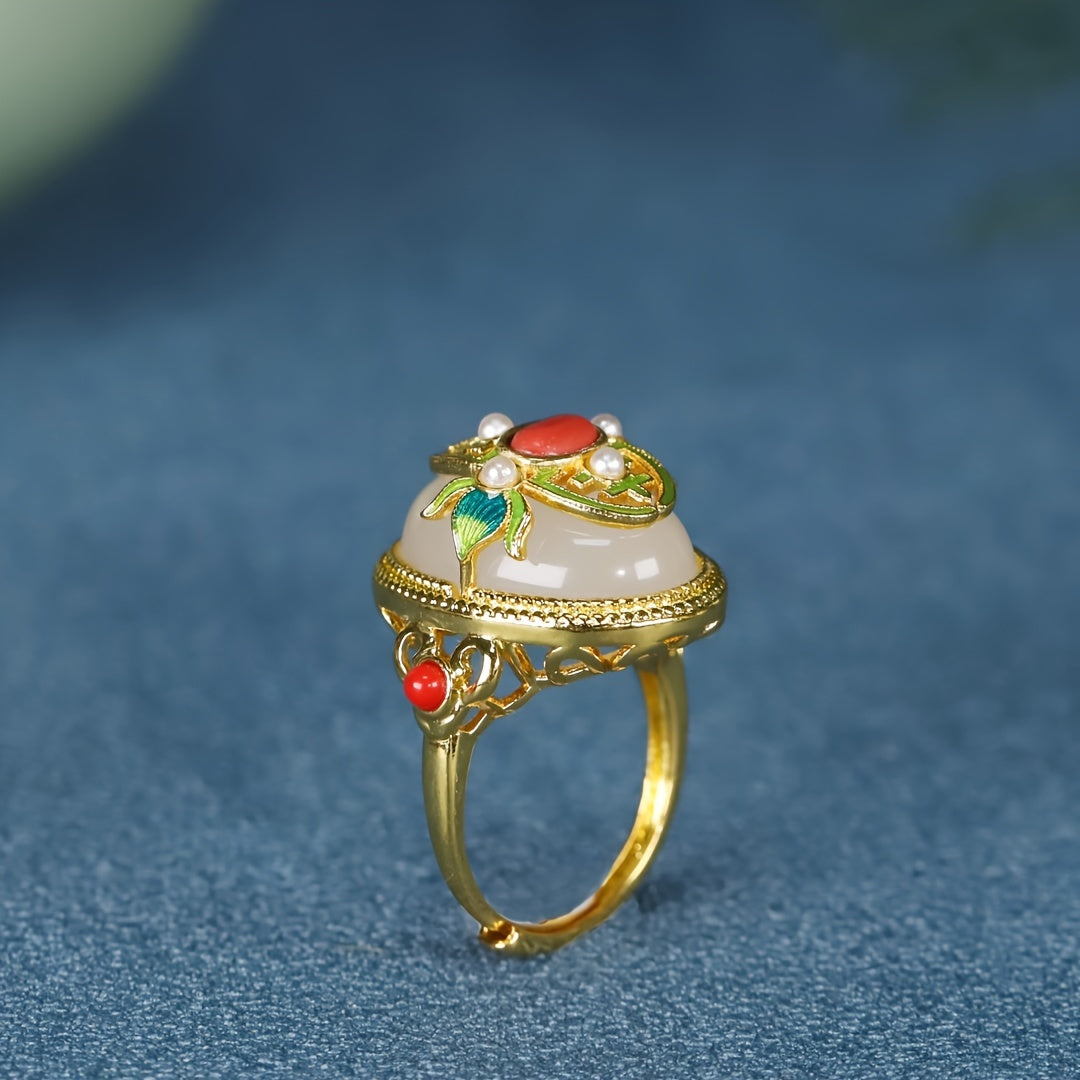
A point of focus in a world of fragmentation.
The ring offers a quiet, counter-cultural message: Integration doesn't mean uniformity. You don't have to blend all your parts into a smooth, marketable puree. You can be a mosaic. The pieces can retain their distinct colors and textures; what holds them together is the intentional setting (the gold band) and the willingness to see them as parts of a single, complex whole.
For the Translator, wearing the ring is an act of self-recognition. It's saying, "I contain multitudes, and that's not a problem to solve; it's a reality to wear." Every glance at the divided stone is a reminder: you are not broken. You are layered. You are both/and. And there is a quiet, sturdy beauty in that, just as there is in the clean line between red and green, held firm by warm, patient gold.
So if you find yourself drawn to objects that represent duality, if you feel most yourself when you're bridging worlds, if your hesitation comes from caring too much about getting the translation right rather than not knowing—you might be navigating life as a Translator. And this ring might be less something you put on, and more something you come home to: a small, heavy, beautiful map of the territory you already know how to walk.
Recognize the Pattern
The Vintage Gold Oval Ring often resonates with the Translator archetype.
View the Jewelry Piece →