





The Observer Teenager: When Sensitivity Feels Like a Language, Not a Flaw
She sits at the back of the classroom, not because she's disinterested, but because it gives her the widest angle of view. From here, she can see everyone: the teacher's tired eyes, the way Jason taps his pencil in a nervous rhythm, the sunlight moving across the floor as the period progresses. She notices the subtext—the slight tension in a friend's shoulders that means something's wrong, the teacher's barely concealed frustration with the curriculum. Information comes to her not through words alone, but through a thousand tiny signals that others seem to miss. What kind of person would understand this immediately? Not the loudest in the room, but the one who sees the room in its entirety.
This is the Observer teenager. Not shy, necessarily. Not anti-social. But operating on a different frequency. Where others engage, she perceives. Where others perform, she witnesses. In a culture that celebrates extroversion, that values quick opinions and visible enthusiasm, her way of being can feel like a deficiency. "Speak up!" "Join in!" "Don't be so sensitive!" The messages accumulate: your natural mode of engagement is wrong. You should be different.
But sensitivity isn't a flaw. It's a language. A way of processing the world that gathers data through subtle channels—tone of voice, body language, environmental shifts, emotional atmospheres. The Observer doesn't just hear what you say; she feels how you say it. She doesn't just see the group activity; she senses the underlying dynamics, the unspoken alliances, the quiet exclusions. This can be exhausting. The cafeteria isn't just a place to eat; it's a complex ecosystem of social currents that she navigates with intense concentration.
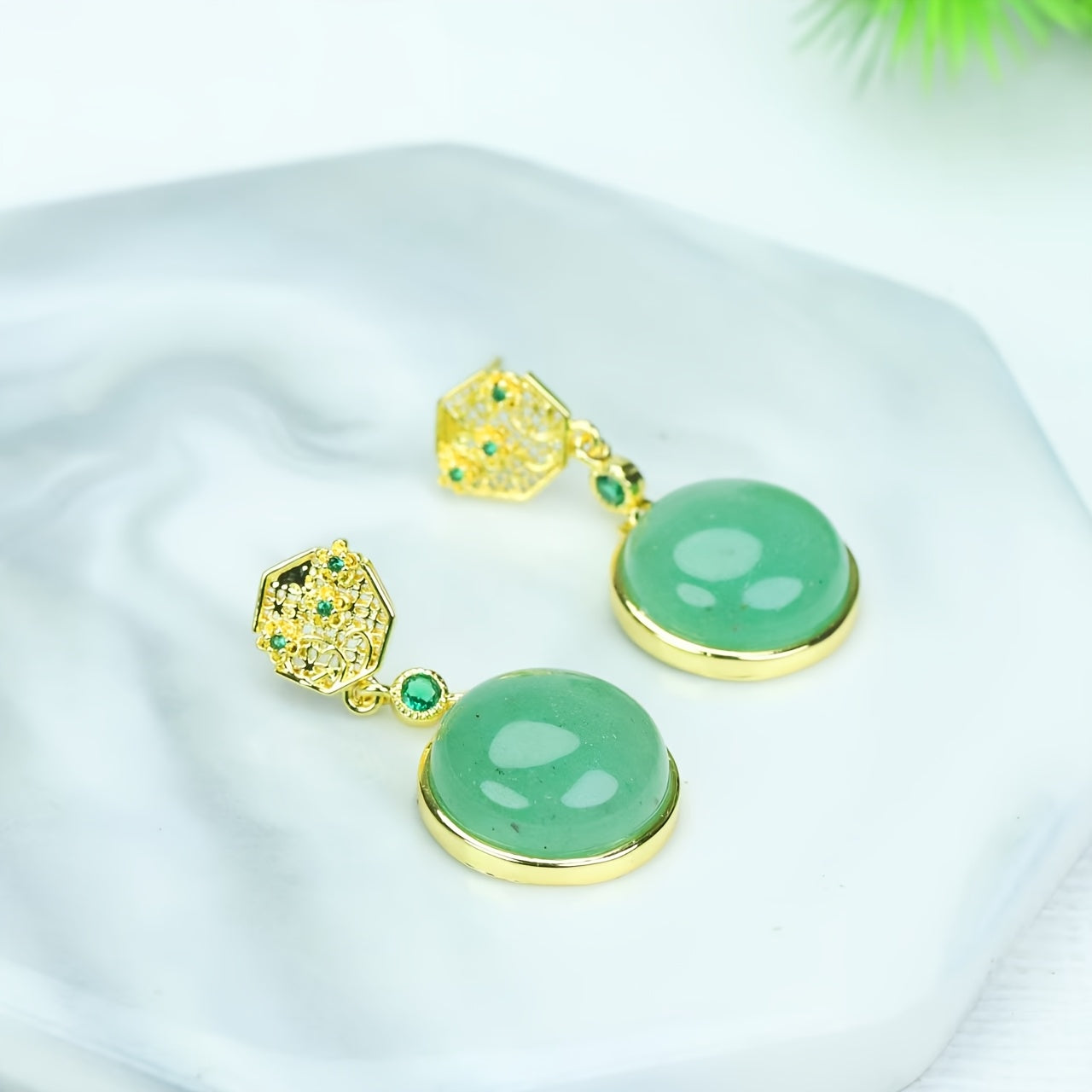
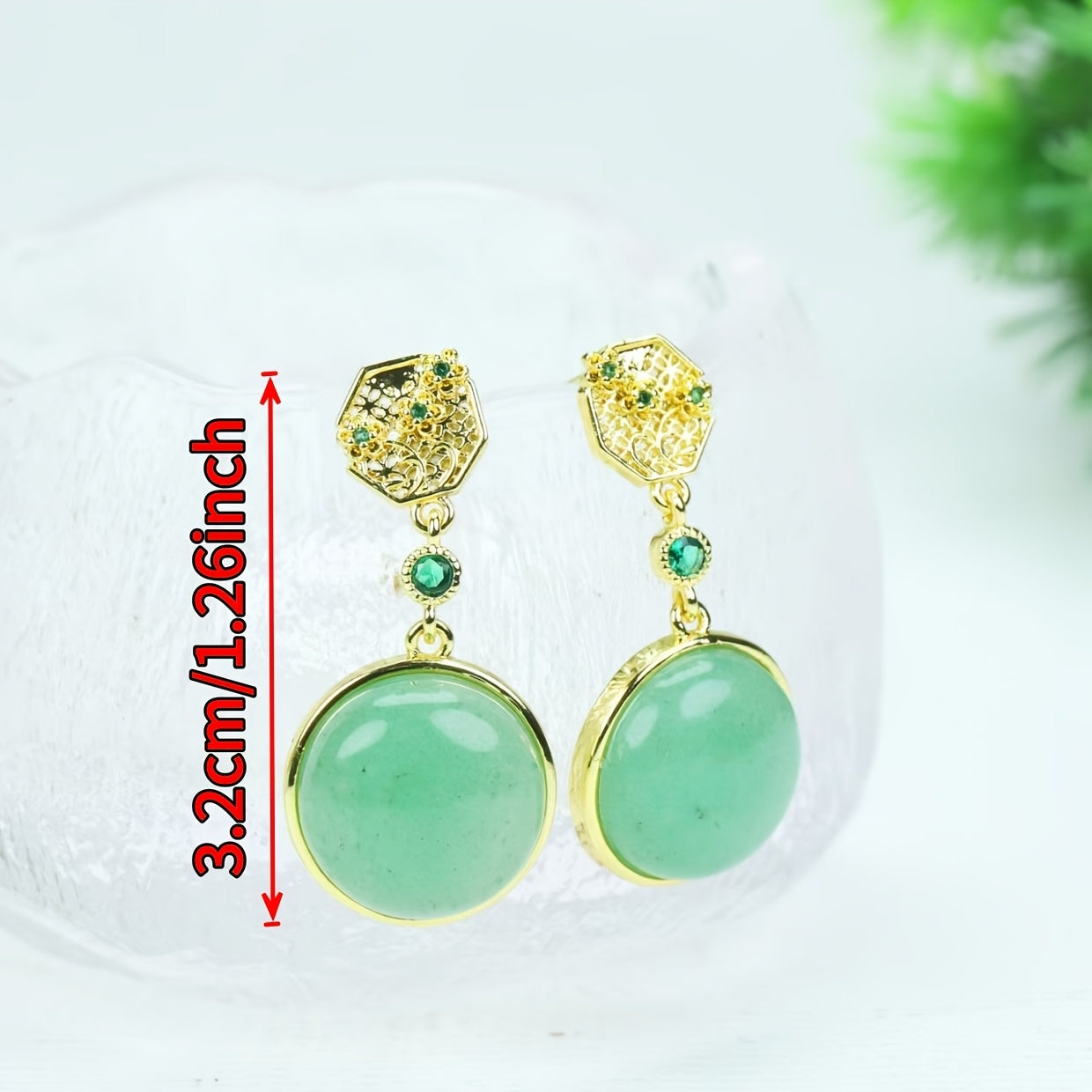
Enter the green stone earrings. She might see them online or in a friend's photo. The attraction isn't about trendiness. It's something quieter. The color is calming, yes, but more importantly, it's steady. In her visual field that's constantly tracking movement and change, the consistent green offers a resting place for her eyes. The simplicity of the design matters—no distracting sparkles, no complicated shapes. Just a smooth drop of color with weight.
When she tries them on, the first thing she notices is the coolness. In a body that often feels overstimulated—skin prickling with awareness, nervous system humming—the distinct temperature of the stone provides a clear sensory boundary. "This is the object. This is my skin. They are different." This differentiation is comforting. It helps define where she ends and the world begins, a boundary that often feels porous and leaky for highly sensitive people.
The weight is equally important. It's a gentle pull downward, a counterbalance to the tendency to float into observation, to dissociate into pure perception. The weight says: you are here, in a body, on the ground. Today, in physics class, when the teacher's voice became a drone and her mind started to drift into the patterns of light on the wall, she reached up and touched the stone. The cool solidity brought her back. Not with a jolt, but with a gentle reorientation. "Oh yes. Here I am."
This is where we must ask: Is attraction the same as alignment? She might be attracted to many things—bold statement jewelry, bright colors, trendy designs. But alignment is different. Alignment happens when the object's nature matches her nature. The stone's quiet presence aligns with her quiet observation. Its steadiness aligns with her need for stability amid flux. Its simplicity aligns with her preference for essence over ornament. The attraction might be aesthetic, but the alignment is existential.
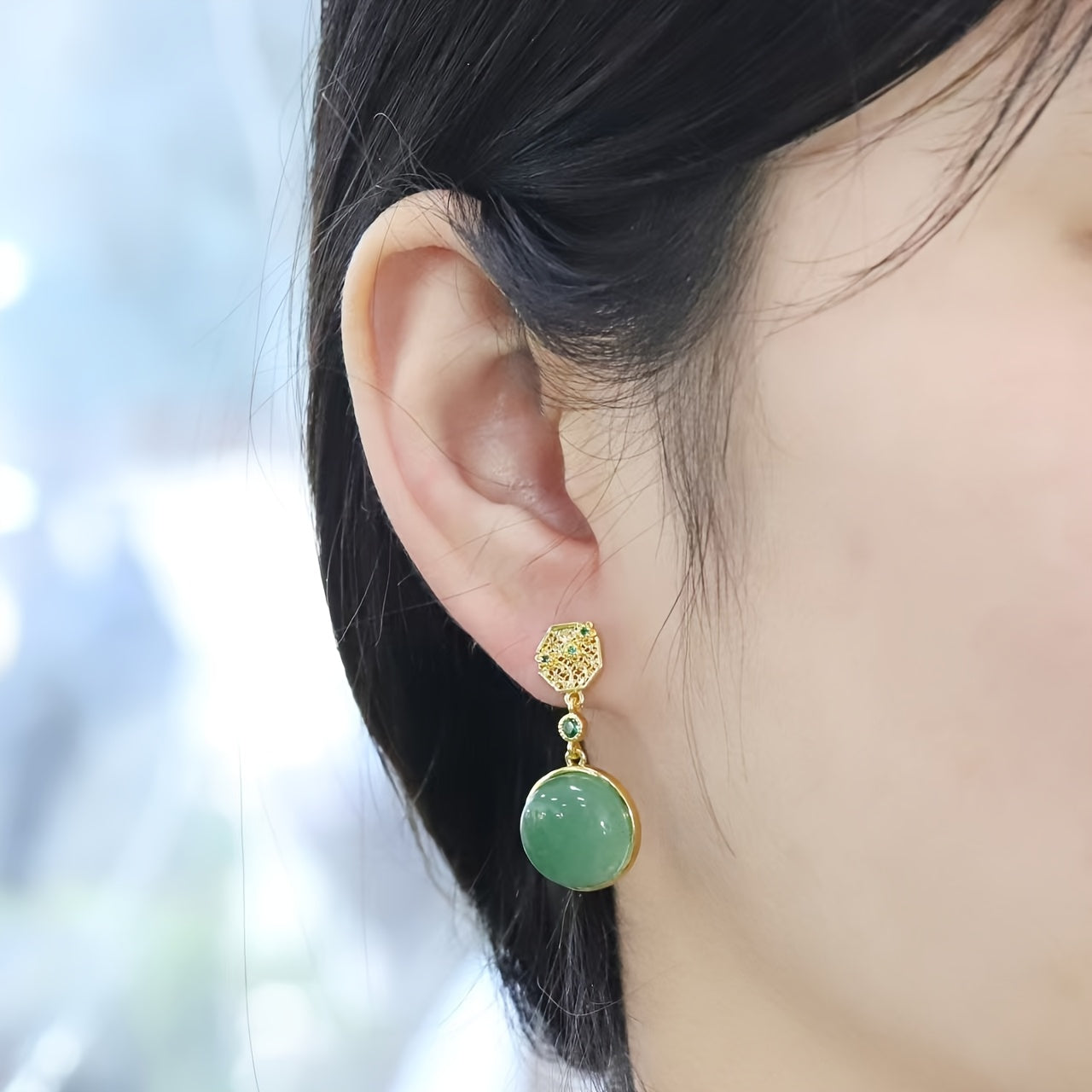
She wears the earrings to school. A classmate says, "Those are pretty." She smiles, says thanks, but doesn't explain. The explanation would require translating her inner world into social speech, and that feels like too much work. The earrings aren't for explanation. They're for being. They accompany her through the hallways, swinging slightly as she walks, their movement a quiet pendulum marking time between classes, between interactions, between moments of being seen and moments of watching.
The Private Language of Objects

This creates an interesting relationship with visibility. The Observer often feels simultaneously too seen and not seen at all. Too seen in her sensitivity—teachers notice she's quiet, peers comment that she's "deep." Not seen at all in her actual complexity—the assumptions pile up: quiet equals shy, observer equals judge, sensitive equals fragile. The earrings offer a third way: they are visible, but their meaning is invisible. They can be seen without being known. This mirrors her own experience: present in the room, but her rich interior life remains private.
During group work, when the discussion becomes chaotic and overlapping, her hand goes to her earlobe almost unconsciously. The stone is warm now, having taken on her body heat. She rubs it gently, feeling the smooth surface. This isn't a nervous habit; it's a regulatory one. The tactile feedback gives her brain something concrete to process while the auditory chaos swirls around her. It helps her stay present instead of retreating entirely into her head.
The lunchroom test: she sits with friends, the noise level rising, laughter bursting at different tables, trays clattering. Her senses are gathering data from all directions—too much data. Her breathing gets shallow. Then she feels the weight of the earrings. She focuses on that singular sensation: the weight. Just the weight. The chaos recedes slightly, becomes background rather than foreground. She takes a deeper breath. The earrings didn't change the environment. They changed her relationship to it. They gave her a focal point that wasn't another person's demanding energy, but a simple, non-demanding object.
Homework time: in her room, with music playing softly, the earrings are still on. She's changed into comfortable clothes, but hasn't removed the jewelry. Why? Because they've transitioned from being school companions to being study companions. Their constancy across contexts is reassuring. The same weight that anchored her in social spaces now anchors her in intellectual ones. As she struggles with a math problem, her fingers find the stone again. The cool smoothness provides a sensory break from the frustration of numbers that won't resolve. It's a different kind of problem—one without solution, simply existing. This contrast is helpful. Not everything needs to be solved. Some things just need to be.
The evening ritual: taking them off. She holds them in her palm for a moment, feeling their combined weight. The metal is cool again, having lost her body's warmth. She places them in a small dish on her dresser. There's a satisfaction in this routine—a clear beginning and end to the day's external engagement. The earrings symbolize her interface with the world. When they're on, she's in relationship with others. When they're off, she's fully in her own space. The boundary is physical, tactile, clear.
This archetype isn't about age, though teenage years often heighten these patterns. It's about a way of being that prioritizes perception over participation, depth over breadth, quality of experience over quantity of interaction. The Observer might become an artist, a writer, a therapist, a scientist—any field that values nuanced perception. Or she might simply become an adult who knows how to protect her sensitivity, how to use objects as tools for self-regulation, how to move through a loud world without losing her quiet center.
The green stone earrings, then, aren't teenage jewelry in the stereotypical sense. They're not about rebellion or trend or identity proclamation. They're about accompaniment. They're for the person who moves through the storm of adolescence not by fighting the wind, but by finding a still point within it. They're for the watcher, the feeler, the one who understands that sometimes the most powerful way to engage with the world is to wear a piece of it quietly, and let that quietness become a strength.
When Quiet Becomes a Compass
We often misunderstand quiet teenagers. We see absence where there's profound presence. We see withdrawal where there's selective engagement. We mistake their rich interiority for emptiness. The Observer archetype challenges this misunderstanding. It says: there is intelligence in watching. There is strength in feeling deeply. There is engagement in careful perception.
The object that speaks to this archetype must respect these values. It must not shout. It must not demand attention. It must offer rather than impose. The green stone earrings do this through their material honesty. They don't pretend to be anything other than what they are: pieces of the earth, shaped simply, meant to be felt as much as seen.
For the Observer, choosing such an object is an act of self-acceptance. It's saying: "My way of being is valid. I don't need to wear something flashy to prove I'm here. I can wear something quiet that helps me be here." This is a revolutionary thought in a culture that equates visibility with value.
The earrings become part of her ecosystem of self-care. Alongside her journal, her favorite music, her solitary walks, they become a tool for managing the intensity of her experience. They're not a cure for sensitivity; they're a companion to it. They don't make the world less overwhelming; they give her a tangible point of reference within the overwhelm.
And perhaps, over time, they teach her something about her own gifts. That her noticing is a form of care. That her sensitivity is a form of intelligence. That her quiet is not a void to be filled, but a space to be inhabited. The stone, enduring and unchanged, reflects back to her the value of consistency, of being true to one's nature even when that nature doesn't match the prevailing noise.
So if you see a teenager wearing simple green stone earrings, swinging gently as she reads in the corner of the library, don't assume she's just accessorizing. She might be engaged in a deep practice of self-regulation, using the weight of the earth to stay grounded in a world that often feels like it's spinning too fast. She might be speaking a quiet language of selfhood that needs no translation. She might be remembering, through touch, that she is both of this world and wonderfully, uniquely herself within it.
The Object of Contemplation
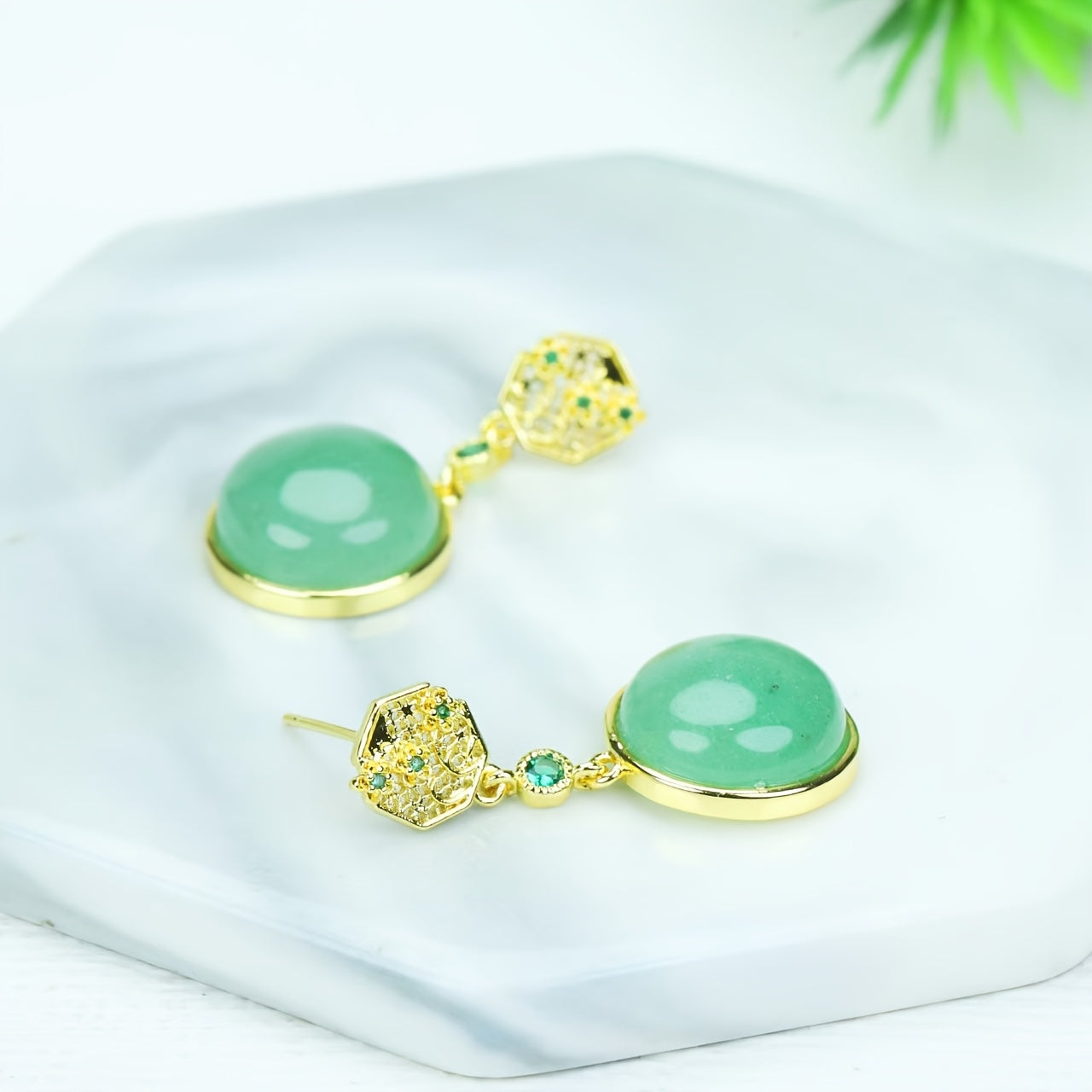
The Elegant Green Natural Stone Drop Earrings featured in this reflection.
 View the Jewelry Piece →