





The Sovereign Archetype: Why Some People Wear Symbols for Themselves, Not for an Audience
She chooses the earrings carefully, but not in the way most people would recognize as "careful." There's no prolonged deliberation in front of a mirror, no texting friends for opinions, no checking Instagram to see how others wear similar pieces. Her carefulness happens earlier, quieter. It happens in the moment her fingers brush against them in the box, feeling the weight. It happens in the slight pause when she notices how the green of the jade looks against her skin in morning light, not bathroom light. It happens in the private recognition: "These are mine." Not in the possessive sense, but in the resonant sense. They vibrate at a frequency she recognizes as her own.
This person—let's call her the Sovereign—exists in every culture, every time period, though she rarely draws attention to herself. She's not the one making bold fashion statements or using jewelry as social signaling. She's the one wearing a simple silver band that turns out to be her grandmother's wedding ring. She's the one with the small, unassuming pendant that holds a story she'll only share if you ask directly, and even then, only partially.
The Sovereign archetype represents a particular relationship with meaningful objects: one where the meaning is primarily internal, where the value comes from private resonance rather than public recognition, and where the object serves as an anchor to self rather than a bridge to others.
Recognizing the Sovereign
Sovereigns aren't necessarily introverts, though many are. They're not necessarily quiet or reserved. You can find Sovereigns in leadership positions, in creative fields, in social settings. What defines them isn't their volume, but their source of validation.
Where others might choose jewelry that says "Look at me," the Sovereign chooses jewelry that says "I am here." Where others might select pieces that align with current trends, the Sovereign selects pieces that align with internal states. Where others might use adornment to project an image, the Sovereign uses it to remember a truth.
The Sovereign's Core Operating Principle
"I derive meaning from internal resonance, not external validation. The objects I choose are private dialogues, reminders, or questions. Their primary audience is me. If others notice and appreciate them, that's pleasant but incidental. If no one notices, that's often preferable. The value exists regardless of visibility."
This doesn't mean Sovereigns are narcissistic or self-absorbed. Quite the opposite. Because they're not relying on external feedback for validation, they're often more present in interactions. They're not constantly monitoring how they're being perceived; they're engaged in what's actually happening.
The jewelry becomes part of this internal stability. It's a touchstone—literally something to touch that returns them to themselves.
The Sovereign's Relationship with Symbolic Jewelry
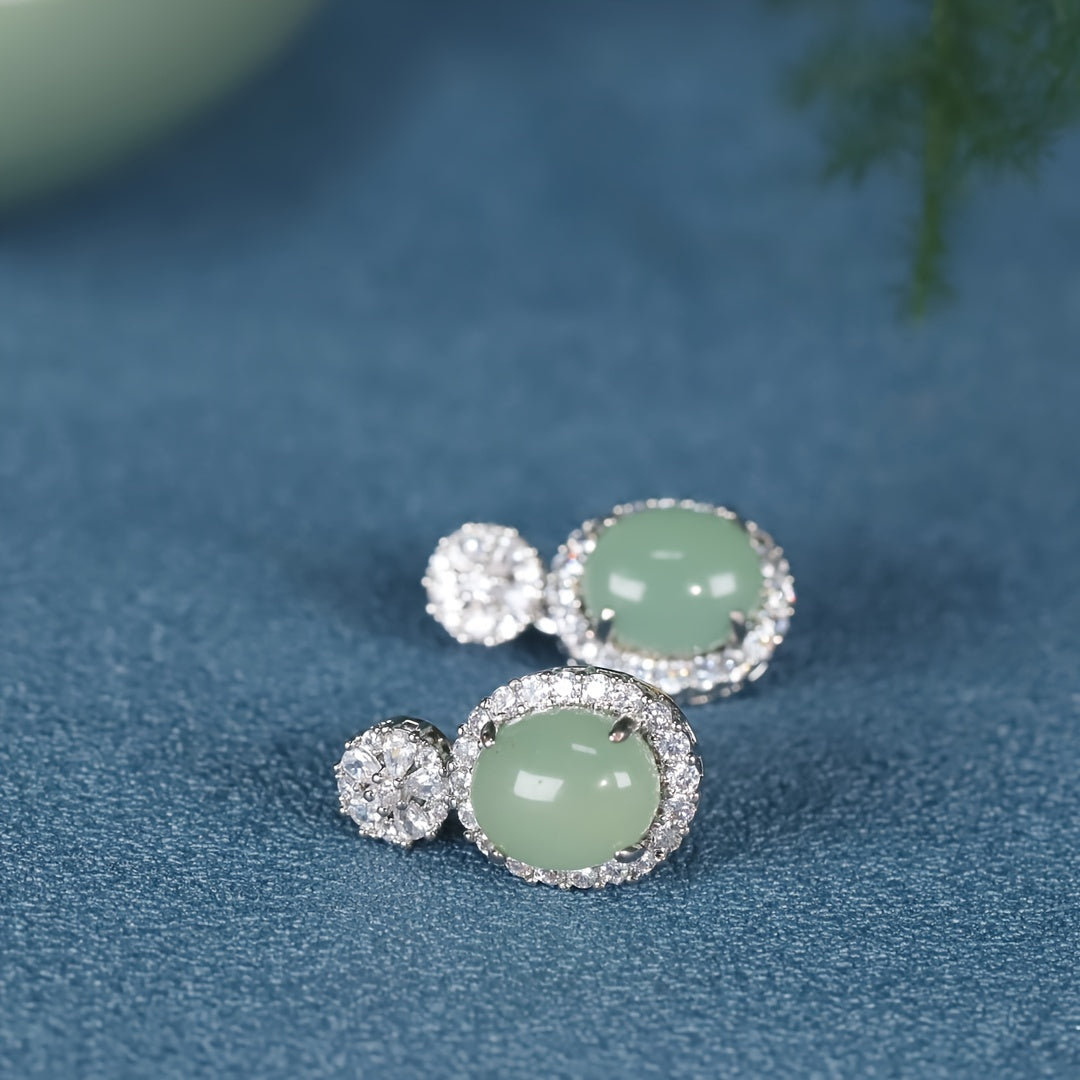
When a Sovereign encounters a piece like the green jade and crystal earrings, something specific happens in their decision process. It's less about "Do I like this?" and more about "Does this resonate?"
Resonance versus preference: Preference is aesthetic ("I like green"). Resonance is deeper ("This green feels like the forest behind my childhood home"). Resonance has memory, emotion, personal history woven into it.
Private meaning versus public meaning: The Sovereign might know the cultural symbolism of jade (virtue, nobility, etc.) but that's secondary. What matters more is what jade means to them. Maybe it's the stone their favorite aunt always wore. Maybe green is the color they see when they close their eyes during meditation. Maybe the coolness of the stone reminds them of a particular mountain stream.
Wearing as practice versus wearing as display: For the Sovereign, putting on the earrings can be a small daily ritual. A moment of contact with something meaningful. The act itself has weight, regardless of who sees it.
The open circle form of these earrings particularly appeals to the Sovereign archetype. Why? Because it's a symbol that refuses closure, that maintains possibility, that doesn't claim to have all the answers. The Sovereign understands that identity itself is an open circle—always under construction, never fully complete.
Why the Sovereign Chooses "Quiet" Pieces
There's a misconception that meaningful jewelry must be bold, large, or obvious. That to carry symbolism, it must announce itself. The Sovereign archetype understands something different: that the most powerful meanings often live in subtlety.
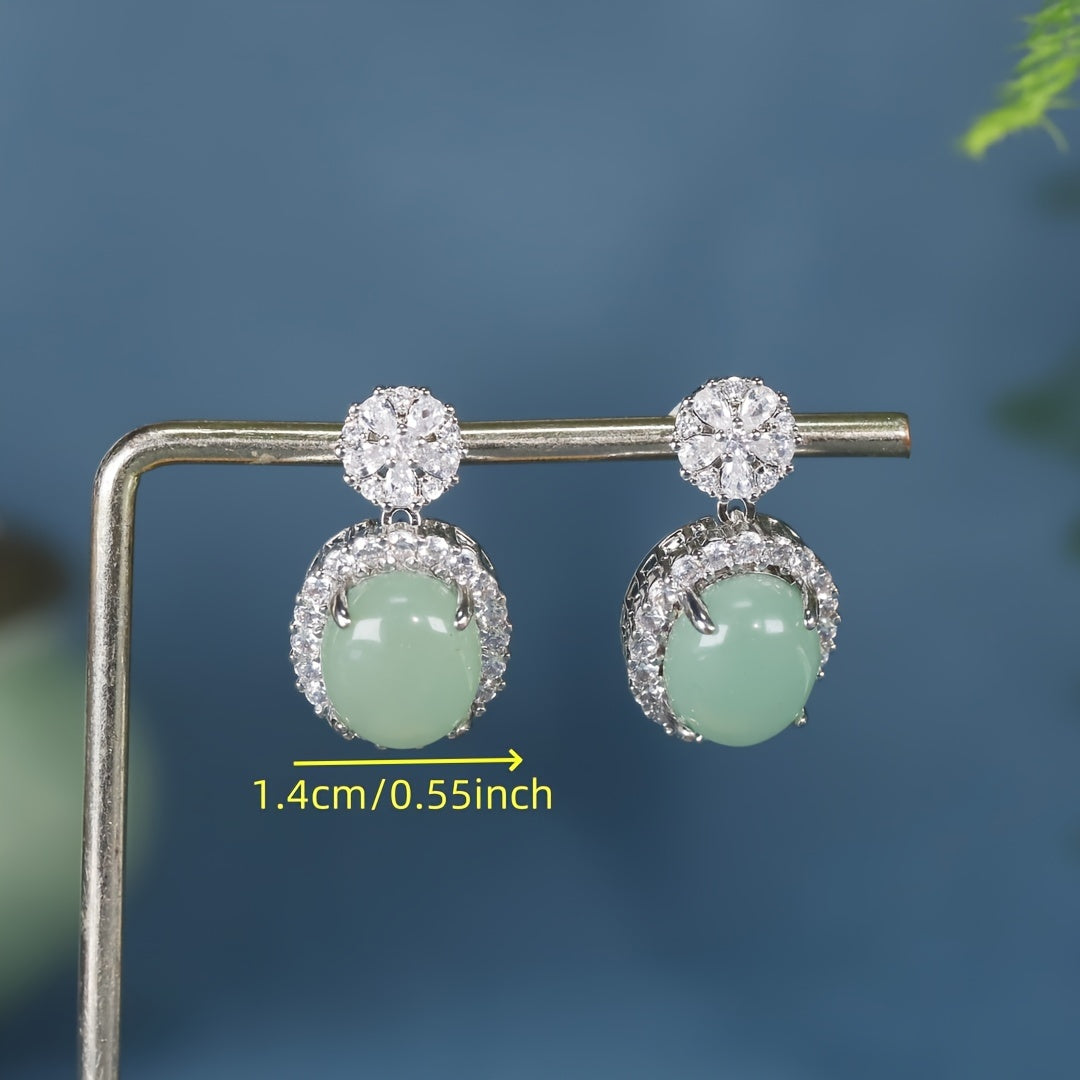
The green jade earrings aren't flashy. The stones are modest in size. The silver is unadorned. From across a room, they might not even be noticeable. But for the wearer, they're rich with sensation and association.
This preference for quiet pieces serves several functions:
Privacy of meaning: When meaning is personal rather than performative, it doesn't need to be legible to others. In fact, there's a protection in having meanings that aren't immediately apparent. They remain yours.
Daily wearability: Loud pieces often become "occasion" jewelry—worn only when the context calls for them. Quiet pieces can be worn every day, becoming integrated into the wearer's life rather than making special appearances.
Sensory focus: When a piece isn't visually demanding, attention shifts to other senses: the feel of the stone against skin, the weight, the temperature, the sound when they move. The Sovereign is often highly attuned to these subtler experiences.
Long-term relationship: Flashy pieces often have shorter lifespans in a wardrobe. They declare themselves so strongly that they can become tiresome. Quiet pieces have staying power. They don't exhaust their welcome because they're not shouting for attention.
The Sovereign isn't opposed to bold jewelry in principle. She simply understands that her relationship with meaningful objects doesn't require volume. Sometimes the deepest conversations happen in whispers.
The Sovereign in a World of Performance
We live in what sociologists call a "performance culture." Social media has turned daily life into a stage where we curate versions of ourselves for audience approval. Even offline, there's pressure to signal identity through consumption: the right brands, the right aesthetics, the right symbols worn in the right ways.
The Sovereign archetype represents a quiet resistance to this performance imperative. Not through loud rebellion, but through simple non-participation.
When a Sovereign wears the jade earrings, she's not wearing them "for the gram." She's not considering how they'll photograph or what hashtags they might attract. She's considering how they feel, what they remind her of, how they fit into her day. The value exists independently of its shareability.
A Sovereign's Morning Ritual
"The earrings are in a small wooden bowl on the dresser. I pick them up one at a time, feeling the cool jade against my fingers. There's a moment when I hold them before putting them on—a pause. I notice which one feels slightly heavier today (they alternate, I've learned). Then I put them on, feeling the hook settle into place, the stones hanging just so. It takes less than ten seconds, but in that time, I've checked in with myself. I'm ready for the day now, not because I look a certain way, but because I feel connected to something that matters to me."
This might sound simple, even trivial. But in a culture that constantly pulls our attention outward—to how we're perceived, to how we compare, to what we should want next—this inward turn is radical. It's a reclaiming of self from the marketplace of identity.
The earrings become tools in this reclamation. Not because they have magical properties, but because they serve as physical reminders: "You can choose what matters to you, regardless of what's supposed to matter."
How to Recognize If You Have Sovereign Tendencies
Most of us contain multiple archetypes, and they surface in different contexts. You might be a Sovereign with jewelry but a Performer with clothing. Or a Sovereign at home but an Ambassador at work. But if you recognize these patterns, you might have strong Sovereign currents:
• You prefer jewelry that feels significant to you over jewelry that looks impressive to others.
• You sometimes choose pieces that are barely visible to others (under clothing, small details).
• You touch your jewelry throughout the day, often unconsciously.
• You keep pieces for years, even if they're not "in style," because they've acquired personal meaning.
• You're more likely to lose interest in a piece if everyone starts wearing it.
• You sometimes wear jewelry that commemorates private milestones no one else would recognize.
• You enjoy the weight and feel of materials as much as their appearance.
• You rarely ask others' opinions before buying jewelry that appeals to you.
Having Sovereign tendencies doesn't mean you never enjoy compliments or never wear statement pieces. It means there's a layer of your relationship with objects that exists purely between you and the object, independent of social context.
The Sovereign's Challenge (and Gift)
The Sovereign archetype faces particular challenges in our current culture. The pressure to perform identity is immense, and choosing not to participate can feel isolating. There might be moments of doubt: "Am I missing out by not caring about trends?" "Should I be more visible with my choices?"
But the Sovereign's gift to the collective is precisely this non-participation. By maintaining a relationship with meaning that isn't tied to social validation, the Sovereign reminds us that it's possible. That we can derive satisfaction from private resonance. That not everything worth experiencing needs to be documented and shared. That some of the richest parts of life happen in the spaces between performances.
When you see someone wearing simple, meaningful jewelry with a kind of unselfconscious ease—not as a curated "minimalist aesthetic" but as a genuine personal choice—you might be looking at a Sovereign. They're not trying to teach you anything. They're simply living their relationship with meaning quietly, visibly but not performatively.
The green jade earrings are perfect for this archetype because they offer multiple layers of engagement. The cultural symbolism is there if you want it (jade's history, the open circle's philosophical roots). The aesthetic beauty is there (the color contrast, the form). But the most important layer—the personal resonance—is blank canvas. It's waiting for the wearer to bring their own meaning, their own memories, their own private associations.
For the Sovereign, this blankness isn't emptiness. It's possibility. It's space for a conversation that no one else needs to overhear.
Not Just an Archetype—A Practice
Perhaps the most important thing to understand about the Sovereign archetype is that it's not just a personality type. It's a practice. It's something you can cultivate, regardless of your natural tendencies.
You might start by choosing one piece of jewelry to wear for private reasons rather than public ones. It doesn't have to be expensive or symbolic in any traditional sense. It just has to mean something to you, for reasons you don't need to explain to anyone.
Wear it consistently. Notice how it feels. Notice when you touch it unconsciously. Notice what it reminds you of at different moments. Notice how your relationship with it changes over weeks and months.
You might find that this practice changes more than just your jewelry choices. It might begin to shift how you make other decisions—what you read, how you spend your time, what you value. Because once you experience the satisfaction of internal resonance, external validation begins to lose its compulsive power.
The green jade earrings, with their open circles and contrasting stones, are particularly good for this practice. The open circle reminds you that identity is never finished. The jade reminds you of deep time. The crystal reminds you of clarity. But mostly, they remind you that you can choose what to carry with you through your days, and that some of the most important choices are the quiet ones only you fully understand.
