




Flipping the Coin: A Simple Gesture for When You're Stuck Between Two Choices
Not a decision-making trick, but a practice in noticing. How the physical act of turning a pendant in your fingers can create a pause, allowing a deeper impulse than logic to surface.
E8 - Daily Friction
The notification hits your phone. Another request. Another decision needed. Your brain, already running at capacity, tries to slot it in. Should you say yes? Should you say no? The mental calculus begins: time required, emotional cost, potential gain, possible resentment. The thoughts spin, but they don't land. They just orbit, creating friction heat in your mind.
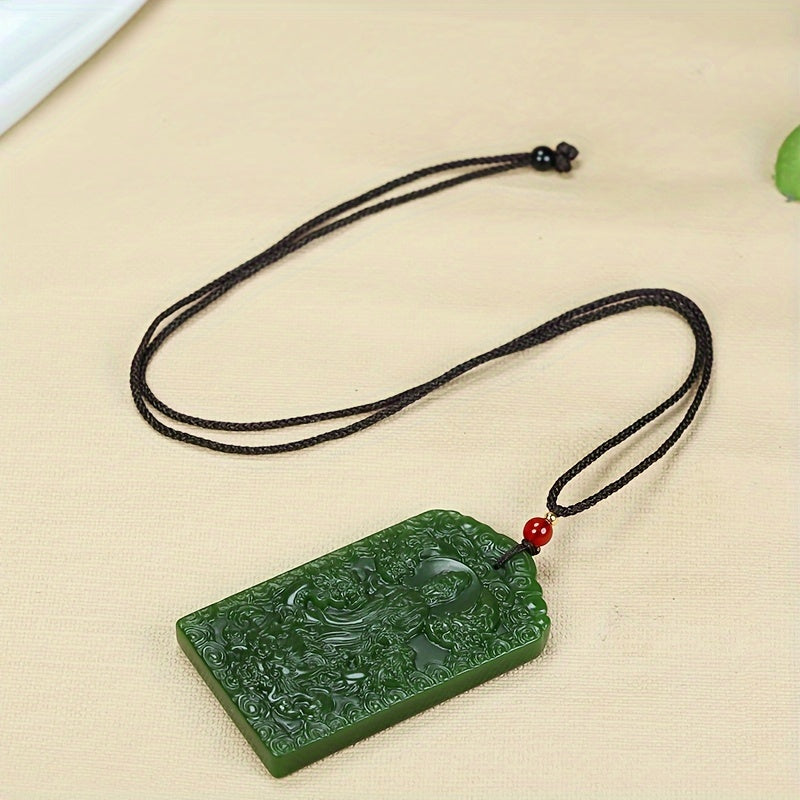
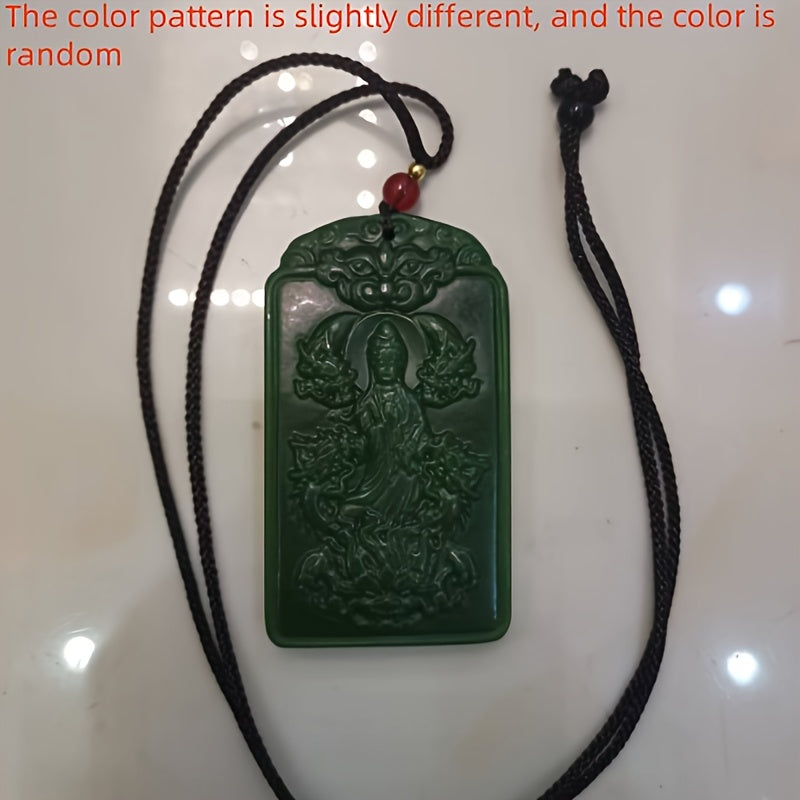
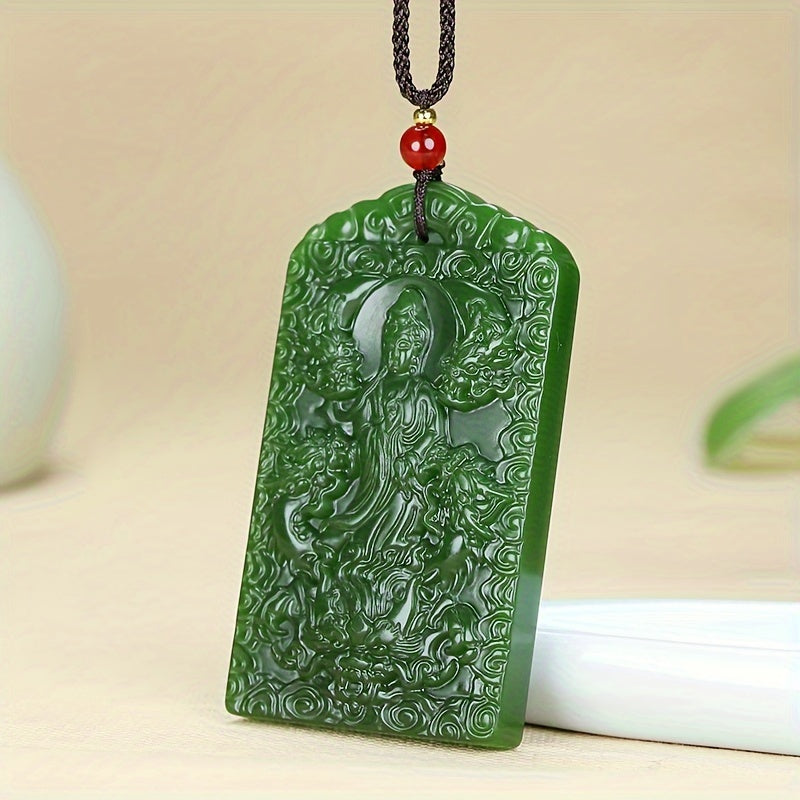
Your hand goes to your chest. Not a dramatic gesture. Just a search for something solid in the spin. Your fingers find the pendant. You don't look at it. You feel it. Cool stone. You trace the face currently forward. Smooth. Guanyin.
Without conscious thought, your thumb and forefinger take the stone and flip it over. You feel the texture change under your skin. Dragon.
In that tiny, physical gesture—the flip—something shifts. Not in the external situation, but inside you. The mental spin slows. The friction eases. You're not suddenly certain of the answer, but you're no longer lost in the chaos of choosing. You're simply present with the stone in your hand, feeling its weight, its temperature, its two distinct faces.
This is the practice. Not mystical, not complicated. Just physical.
The Pause That Isn't Passive
We're taught that being decisive is a virtue. That hesitation is weakness. So when we're stuck between options, we often push harder. We make pro/con lists. We ask for more opinions. We try to think our way out of the stuckness.
This practice proposes something different: when thought is stuck, move to sensation. When the mind is looping, engage the body.
The act of flipping the double-sided pendant creates a deliberate pause. But it's not a passive pause, like waiting for inspiration. It's an active, somatic intervention. You're redirecting your attention from the abstract problem in your head to the tangible object in your hand.
This redirection does something neuroscience can explain: it interrupts the neural loop of anxious rumination. It gives your prefrontal cortex—the overworked executive—a break. It moves activity to the sensory and motor cortices. In that shift, space opens. Not for more thinking, but for something else: intuition, gut feeling, the wisdom of the body.
The Practice: Three Breaths, One Flip
Here's how it works, in its simplest form:
- Notice the Spin: You're feeling stuck between options. The mental friction is building. Instead of pushing through, acknowledge: "I'm spinning."
- Find the Stone: Reach for the pendant. Don't look at it. Just feel it. Notice its temperature against your skin. Notice its weight on the 32cm rope.
- Three Breaths: Take three slow breaths. On the first, feel the current face under your thumb. On the second, feel the edge of the stone. On the third, feel the decision to flip forming in your fingers.
- The Flip: Turn the stone over. Feel the texture change completely. Smooth becomes textured, or textured becomes smooth. Notice the slight resistance, then the click of completion.
- After: Don't immediately ask for an answer. Just hold the new face. Feel it. Wait. See what arises. It might be clarity. It might be the realization that you need more information. It might be simple calm. All are valid outcomes.
The goal isn't to get the "right" face forward. The goal is to exit the mental spin cycle and enter a state of embodied awareness. From that state, whatever decision emerges will be more grounded, more integrated, more yours.
Beyond Binary Choices
This practice isn't just for yes/no decisions. That's its most literal application, but its real power is subtler.
Use it when you're stuck between emotional states: between anger and sadness, between hope and resignation. Flip the stone. The Dragon might connect you with the clean fire of justified anger. The Guanyin might connect you with the softening release of sorrow. Both are true. The stone lets you honor the transition.
Use it when you're stuck between perspectives: between your own needs and someone else's, between short-term gain and long-term value. The flip creates a somatic marker that you've consciously shifted your point of view. It's a way of saying to yourself: I have now considered the other side. Physically.
Use it when you're not stuck at all, but want to mark a transition: between work and home, between social time and alone time, between one project and the next. The flip becomes a ritual threshold, a way of telling your nervous system: That chapter is closed. This one is beginning.
The Science of Somatic Markers
Neuroscientist Antonio Damasio's research on "somatic markers" is relevant here. He proposed that emotions don't just accompany decision-making; they're essential to it. Bodily sensations (a gut feeling, a tension in the chest) tag memories and options with emotional value, helping us navigate complex choices quickly.
When we're overwhelmed or dissociated, we lose access to these somatic markers. We're trying to decide with logic alone, which is like trying to navigate a dark room with only a tiny flashlight. We might see details, but we miss the whole picture.
The pendant practice is a way of reactivating the somatic marker system. By engaging touch, temperature, and weight, it brings you back into your body. It grounds the abstract decision in physical sensation. From that grounded place, your innate emotional intelligence—which has been processing the situation all along—has a chance to communicate its "gut feeling" in a way you can actually feel.
The natural stone becomes an external somatic marker. Its two distinct textures give your body two distinct physical experiences to associate with different modes or choices. Over time, a neural pathway forms: this texture equals this internal state. The object trains your awareness.
When Answers Don't Come
Sometimes you flip the stone, and... nothing. No clarity. No gut feeling. Just the same stuckness, now with a different face forward.
This isn't failure. It's valuable data. It means the decision isn't ripe. It needs more time, more information, or a different question entirely.
The practice then becomes one of tolerance. Can you stay with the not-knowing? Can you let the stone be simply a stone, not an oracle? Can you wear the ambiguity as you go about your day, feeling its weight, noticing which face you unconsciously choose to keep forward?
Often, the answer emerges hours later, when you're not trying. In the shower, on a walk, as you're falling asleep. The practice didn't give you the answer; it created the conditions for the answer to find you.
Building the Muscle
Like any practice, this one gets more effective with repetition. Not because the pendant gains power, but because your neural pathways become more efficient.
At first, you might have to consciously remember to reach for it. The gesture might feel awkward, even silly. That's normal. You're building a new habit, creating a new association between internal stuckness and a physical intervention.
After a few weeks, it becomes automatic. You'll find your hand going to the stone before you're fully aware you're stuck. The three breaths become second nature. The flip becomes a seamless part of your internal process.
Eventually, you might not even need to flip it physically. Just touching it, feeling its presence, becomes enough to trigger the pause, the breath, the shift in awareness. The object has done its job: it has trained your mind to create its own pauses.
A Tool, Not a Crutch
This practice isn't about outsourcing your decision-making to a piece of stone. That would be superstition, and it would quickly fail you.
It's about using a physical object to access your own deeper intelligence. The stone is a mirror, a catalyst, a grounding rod. It doesn't have the answers. You do. It just helps you quiet the noise enough to hear them.
The dragon and guanyin pendant is particularly suited for this because its duality mirrors the duality inherent in most stuck places. We're usually stuck between two valid options, two true parts of ourselves, two legitimate needs. The pendant doesn't judge one as better than the other. It holds both as real. In doing so, it gives you permission to hold both as real, too.
And in that permission—to be complex, to be uncertain, to contain opposites—lies the freedom to choose not from fear or pressure, but from a place of wholeness. The flip of the stone is just the physical punctuation mark in that sentence of self-trust. A period that says: I am here. I am listening. And I will know when it's time to move.
Begin the Practice
The Dragon and Guanyin Double-Sided Pendant. A tactile tool for finding clarity in complexity.
View the Jewelry Piece →