





Choosing a Companion, Not a Cure: A Dialogue on Hesitation and Hope
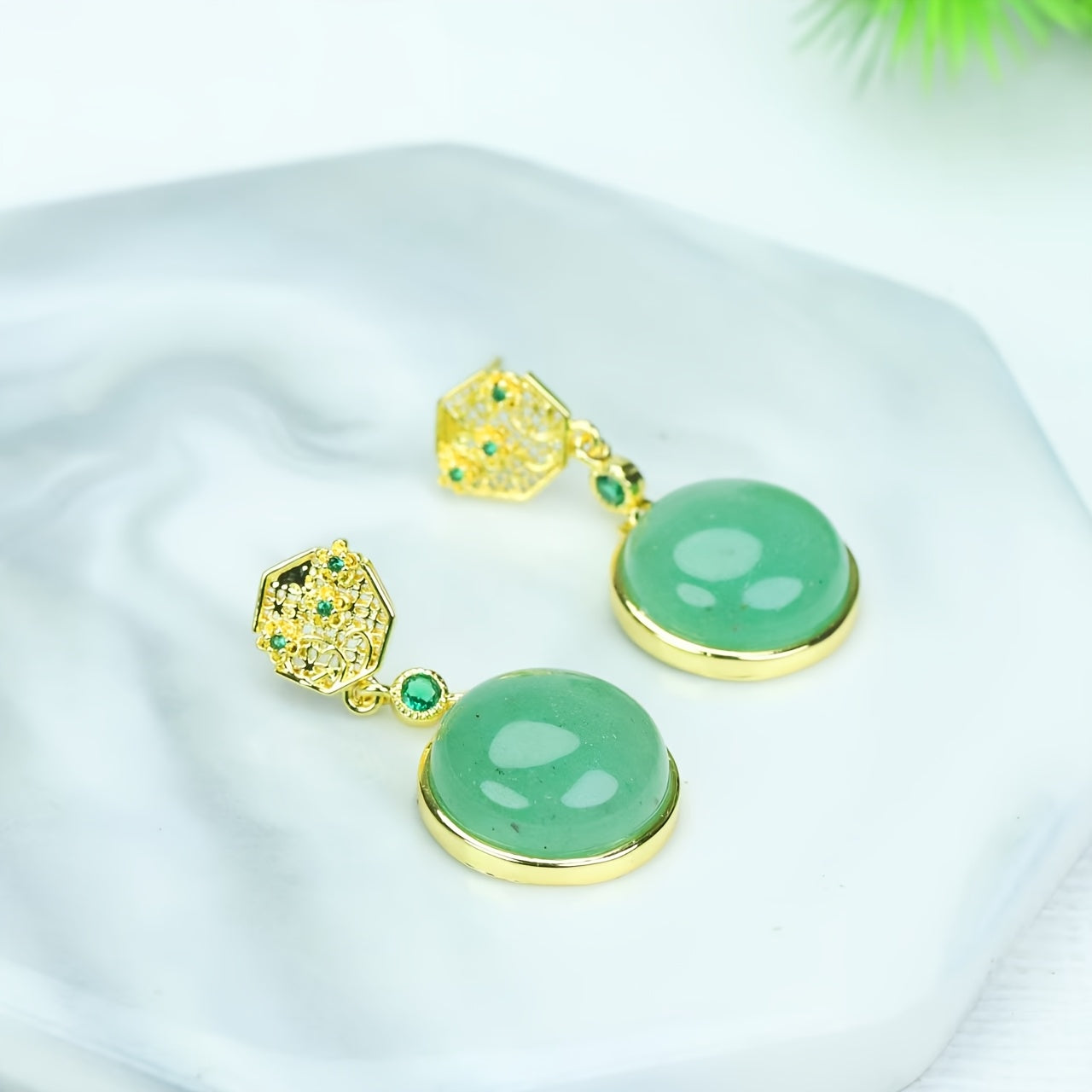
You've been looking at the photo for a while now. Scrolling back to it between other tabs. The green stone catches the light in a way that feels... steady. That's the word that comes to mind. Not beautiful, though it is. Not trendy, though it could be. Steady. You find yourself returning to it on days when you don't feel steady at all. Days when your emotions feel like weather systems moving through too quickly, when your thoughts won't settle, when the ground beneath you seems less solid than it did yesterday.
The description says something abou t emotional balance. You pause at that. Part of you scoffs—it's just a stone, how can it balance anything? But another part, a quieter part, wonders: what if? What if having something steady to touch could help? What if wearing a piece of the earth could remind you that not everything fluctuates like your moods do?
This is where the hesitation begins. It's not about the money, not really. It's about the hope. The hope that this object might do something. Might help. Might be more than just an accessory. And with that hope comes fear: the fear of being disappointed, of buying into a pretty story, of wanting magic where there's only matter.
Let's sit with that for a moment. The hesitation as a measure of care, not confusion. You're not unsure if you like the earrings; you're clear on that. You're unsure if you can trust yourself with them. Can you wear them without expecting them to work? Can you appreciate their steadiness without demanding they make you steady?
This is the core tension: wanting help but distrusting anything that promises it. Living in a world of quick fixes and miracle cures that always disappoint, you've developed a healthy skepticism. Good. Keep it. But what if this object isn't promising anything? What if it's just... there? Offering its greenness, its weight, its cool smoothness. Not as a solution, but as a companion to whatever you're feeling, steady or not.
Imagine wearing them on a bad day. Not a catastrophic day, just one of those off days where everything feels slightly wrong. You put them on in the morning, feeling the cool posts against your ears. They don't magically lift your mood. But as the day progresses, you occasionally feel their weight swing when you turn your head. The movement is gentle, rhythmic. In a moment of frustration, your hand goes to your earlobe—a nervous habit—and you feel the smooth stone. It's cool again, having lost your body's warmth during the walk to school. The contrast is sharp, clear. It doesn't fix anything. But it does something else: it provides a sensory fact in a day of emotional ambiguity. "This is cool. This is smooth. This has weight." These are simple truths. Amid the complexity of your feelings, they are anchors of simplicity.
Now imagine wearing them on a good day. They're just earrings. Pretty green drops that catch the light. You might forget you're wearing them until someone compliments them. You smile, say thank you, maybe touch one unconsciously. Their meaning shifts with your mood. On bad days, they're anchors. On good days, they're decorations. They don't insist on being one or the other. They accommodate.
This accommodation is what makes them companions rather than cures. A cure has one job: to fix what's broken. A companion has many jobs: to be there when you're broken, to be there when you're whole, and to not particularly care which state you're in. The earrings, being inanimate, are perfect at this. They truly don't care. They offer their physical constancy regardless of your emotional variability.
The Fear of Misrepresentation
There's another layer to the hesitation. If you wear these, what will people think? Will they assume you're into crystal healing? Will they see you as someone who believes in magic rocks? Will you have to explain yourself, or worse, feel like you're misrepresenting yourself by wearing something that comes with cultural baggage you don't fully embrace?
This is a real concern. Symbols carry public meanings, and we navigate those meanings whenever we wear something symbolic. But here's a thought: what if you're not wearing the symbol? What if you're wearing the stone? The actual, physical, geological object. The symbol is an idea attached to it by culture. The stone is just... a stone. Formed under pressure, polished by human hands, now hanging from a wire.
When your friend asks about them, you don't have to give a spiritual explanation. You can say, "I just like how they look." Or, "I like the color green." Or, "They feel substantial." These are all true, and they don't engage with the symbolic layer at all. You're not obligated to explain or justify. The earrings can be just earrings to the outside world, while being whatever they are to you in private.
This split between public perception and private meaning is actually quite freeing. It allows the object to exist in two realms simultaneously: as a simple accessory in the social sphere, and as a personal companion in your interior life. The people who need to see the depth will see it. The people who don't, won't. And you're not responsible for their seeing or not seeing.
There's also this: maybe being seen as someone who needs something isn't a misrepresentation. Maybe it's just honesty. Everyone needs something. Some need coffee to start the day. Some need music to concentrate. Some need a walk to clear their head. Needing a tactile anchor isn't weaker or more mystical than these common needs. It's just less discussed.
So what if someone does assume you're into crystal healing? Does that assumption define you? Or can you hold your own private relationship with the object while letting others hold whatever assumptions they want? Their assumptions are about them, not about you or the stone.
This gets to the heart of wearing symbolic objects in a secular, skeptical age. We want the depth of meaning but not the dogma. We want the connection to tradition but not the constraint. The green stone earrings sit in this ambiguous space beautifully. They come from a long history of stone appreciation across cultures, but they don't require you to subscribe to any particular belief system. You can appreciate them as geology, as art, as design, as personal reminder—or all of these at once.
The fear of misrepresentation, then, might really be a fear of being misunderstood. But consider: if you wear them quietly, without fanfare or explanation, the only person who needs to understand their meaning is you. And that meaning can be fluid, changing, personal. It doesn't have to be defensible or consistent. It just has to be true for you, in this moment.
Observation Versus Expectation
Let's return to the original hesitation, but frame it differently. What if wearing these earrings isn't about hoping they'll do something, but about observing what happens when you wear them? Not with expectation, but with curiosity.
This shifts everything. The earrings become a tool for self-observation rather than a tool for self-transformation. You wear them and notice: Do I touch them more when I'm anxious? Does their weight comfort me or annoy me on different days? Does the green color affect my mood, or my perception of my mood? These aren't questions with right answers. They're inquiries.
Suddenly, the pressure is off. The earrings don't have to work. You just have to notice. And in that noticing, something interesting might happen: you might become more aware of your own patterns. The earrings become a mirror, reflecting back to you your own states of being. Not to judge them, but to see them more clearly.
This approach respects both your skepticism and your hope. The skeptic in you says: "It's just a rock, it can't do anything." Fine. Wear it as just a rock, and observe what happens. The hopeful part of you says: "Maybe it could help." Also fine. Wear it and observe if it does. The observation itself becomes the practice, not the outcome.
Over time, you'll collect data. Not scientific data, but personal data. "On Tuesday, when I was really stressed about the test, I found myself holding the stone during study hall. It was cool, and that coolness felt clarifying." "On Friday, when I was happy and going out with friends, I forgot I was wearing them until I saw my reflection. They just looked nice."
This data builds a personal mythology around the object. Not a universal truth, but your truth. The earrings become imbued with the history of your observations. They become meaningful not because of what they symbolize in the abstract, but because of what you've observed while wearing them.
And here's the secret: this observational stance is available with any object. But the earrings are particularly good for it because of their physical properties—their weight, their temperature, their visibility in your peripheral vision. They're designed to be noticed, both by you and by your senses.
So maybe the question isn't "Should I buy these hoping they'll help?" Maybe the question is "Am I curious enough about my own experience to wear these and observe what happens?"
The hesitation might remain. That's okay. Hesitation can be a form of respect—respect for your own complexity, respect for the object's potential, respect for the seriousness of seeking comfort in a difficult world. You're not being indecisive. You're being thoughtful. And that thoughtfulness, that care, is already a form of the steadiness you're looking for.
Perhaps the earrings wouldn't give you anything you don't already have. Perhaps they would just help you notice what you already have: a capacity for observation, for feeling deeply, for caring about your own state of being. And perhaps that noticing—that gentle, persistent turning of attention toward your own experience—is the real companion you've been seeking all along.
The earrings might just be the excuse to do it.
The Object of Contemplation
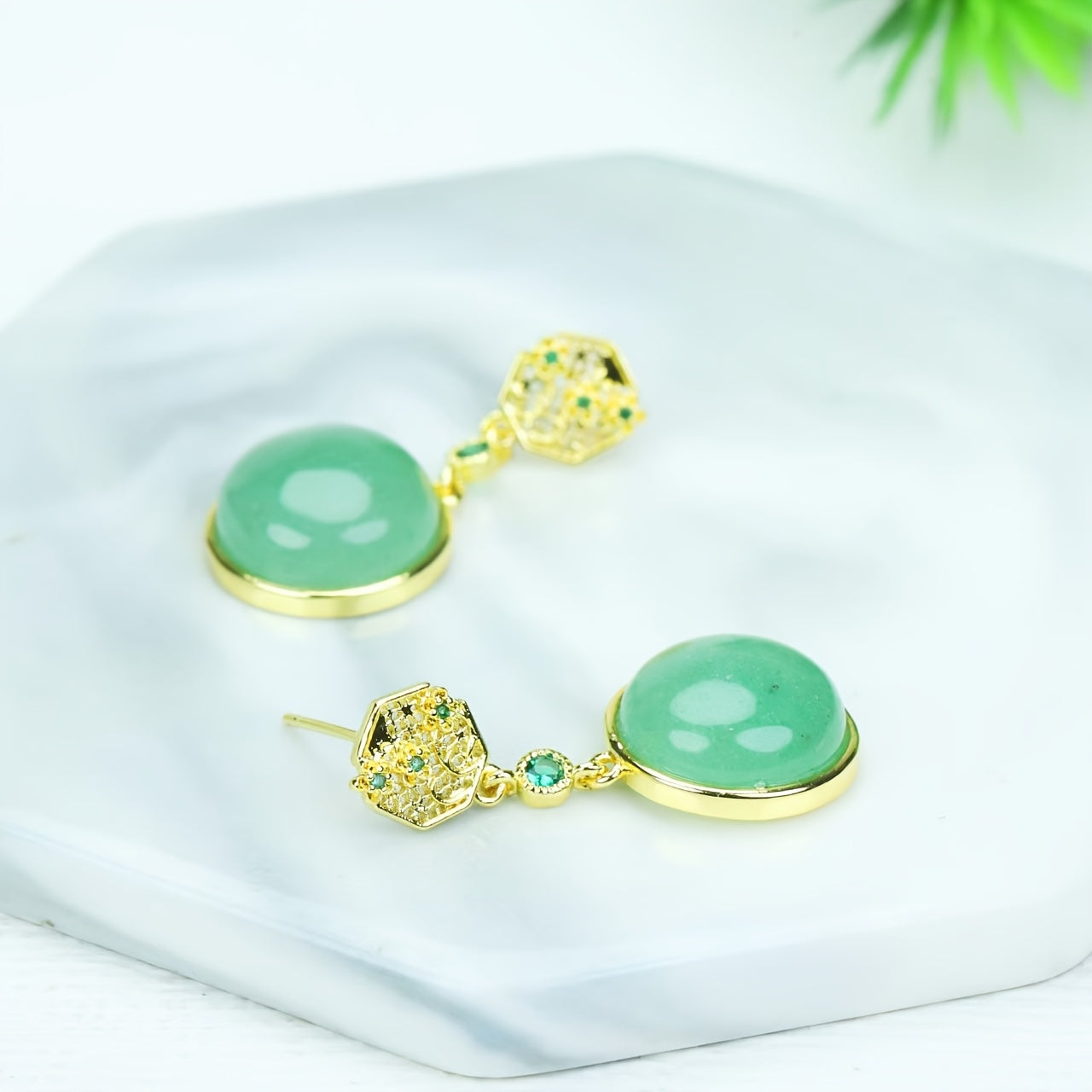
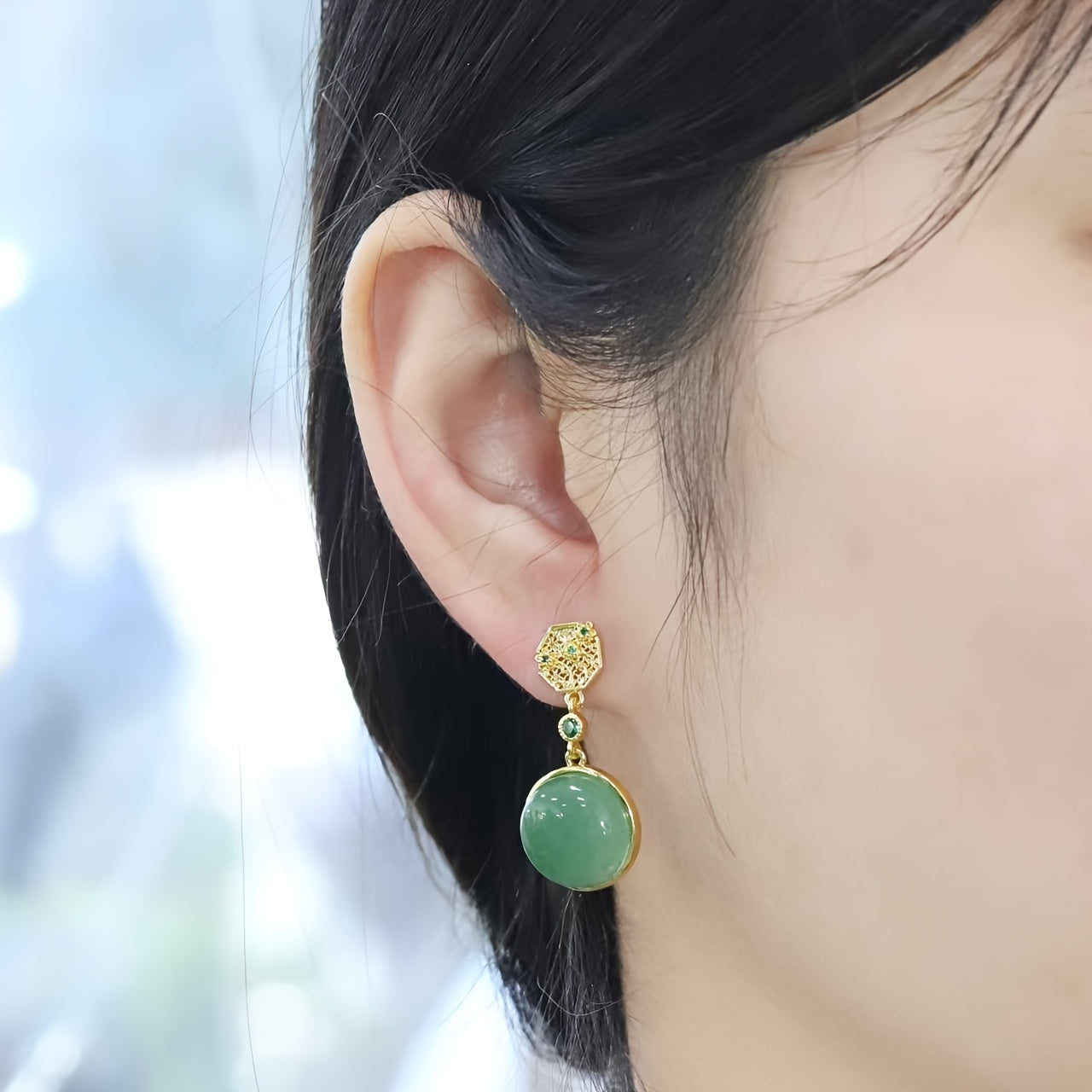
The Elegant Green Natural Stone Drop Earrings that inspired this dialogue.
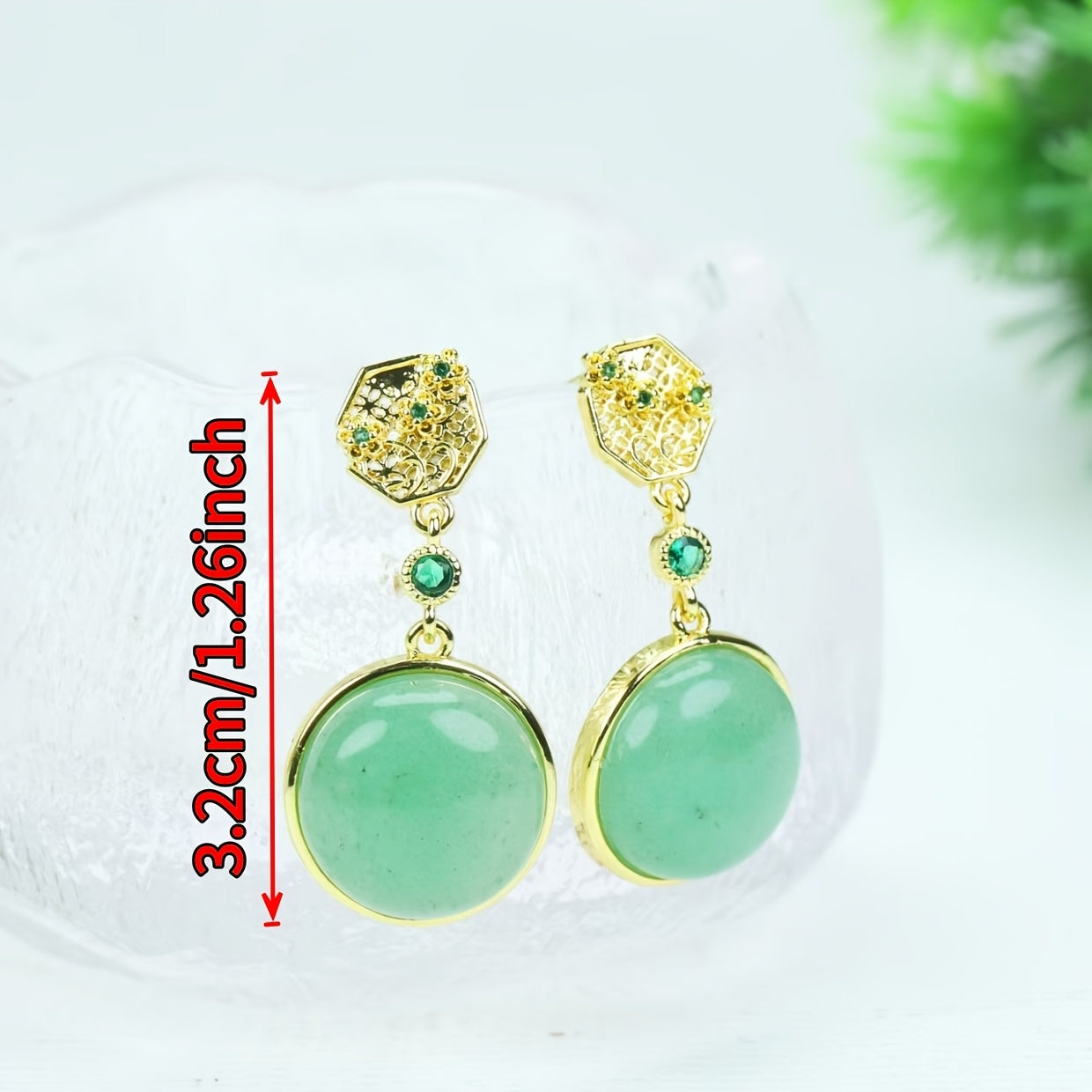 View the Jewelry Piece →