





Between Adornment and Anchor: A Dialogue on Wearing Weight
“Am I wearing this to feel lighter, or to feel more here?” A reflective space exploring the hesitation around choosing an object that has palpable substance, and what that substance might be holding for you.
The Hesitation
It starts with a simple observation: this piece has weight. Not metaphorical weight, but actual, measurable mass. When you hold it, you feel it. When you imagine wearing it, you anticipate its gentle pull on your earlobe.
And here, a question forms, often unspoken: Do I want this? Not in the sense of aesthetic preference, but in a deeper sense: Do I want to carry this weight? Do I want to feel this presence on my body, day after day?
Some people hesitate because they're used to jewelry that disappears—tiny studs, thin chains, things that you put on and forget. This doesn't disappear. It reminds. It has a voice, though a quiet one. And the hesitation asks: Am I ready for that voice? What if it says something I don't want to hear?
The hesitation isn't about the object's beauty or cost. It's about its claim. A lightweight piece makes no claim; it decorates and recedes. A weighted piece makes a small but persistent claim on your attention. It says, I am here. You are here. And for some, that very declaration creates friction. What if I don't want to be reminded that I'm here? What if I'd rather float through the day, unanchored?
This tension sits at the heart of the decision. It's not a choice between yes and no, but between two different relationships with your own presence: one that prefers lightness and escape, and one that seeks grounding and acknowledgment.
Perhaps you've felt this before with other objects—a heavy watch, a substantial ring, a bag with heft. The hesitation is a signal. It's worth listening to, not to talk yourself out of the choice, but to understand what the choice represents.
Fit and Permission
Then comes the second layer: Is this for someone like me? The question of fit. Not physical fit, but identity fit. Who wears weighted, symbolic jewelry? Someone serious? Someone spiritual? Someone who has their life together?
We often internalize stories about what certain objects "mean" about their wearers. Heavy jewelry might read as "intentional," "grounded," "earthy." But what if you don't feel those things? What if you feel scattered, airy, uncertain? Is it dishonest to wear an object that represents qualities you aspire to but don't fully embody?
Or perhaps the opposite: what if you are already so grounded, so serious, that wearing something with weight feels like adding ballast to a ship that's already sitting low in the water? What if you need lightness, not more gravity?
The question of permission is subtle. It's not about cultural appropriation or ethical boundaries. It's about internal permission: Do I allow myself to wear something that might be read as "meaningful" when my own relationship to that meaning is ambiguous, private, or still forming?
Some people grant themselves this permission easily. They wear symbols as questions, not declarations. Others feel a pressure to "live up to" the object, to deserve it. The hesitation here is a checkpoint: it asks you to examine where that pressure comes from. Is it social? Is it from a part of you that demands consistency between inner state and outer appearance?
Perhaps the fit isn't about matching a current identity, but about companionship for a journey. The weight isn't a badge of arrival; it's a companion for the walk. Viewed this way, the question shifts: Not "Am I the kind of person who wears this?" but "Could this be a kind companion for the person I am becoming?"
Visibility and Misreading
Then there's the social layer. Weighted drop earrings are visible. They move. They catch light differently than a stud. People might notice. And with notice comes the possibility of comment, of interpretation.
What if someone asks about them? What if they assume you're into crystal healing, or boho fashion, or vintage collecting—and you're not, or not in the way they assume? What if you have to explain, and in explaining, reduce something personal to a soundbite?
The fear of misreading is real. We want to be seen accurately, or at least, not to be boxed into a category that feels foreign. An object with clear cultural or stylistic associations carries that risk. It comes with preconceived narratives.
This hesitation is about boundaries. How much of your private relationship with an object are you willing to defend or explain? For some, the solution is silence—to wear it without comment, to let others think what they will. But that requires comfort with being misunderstood, or at least, with not being fully known.
There's another angle: what if the visibility is part of the practice? What if wearing something that could be misread is an exercise in non-attachment to others' perceptions? The object becomes a mirror for your own need for external validation. Do you need others to "get it" for it to be valid for you?
Perhaps the hesitation around visibility is less about the object and more about your relationship to the social gaze. The earrings don't change; your tolerance for being seen holding something ambiguous does. This is a valuable tension to sit with. It clarifies what you're actually choosing: not just an object, but a stance toward social perception.
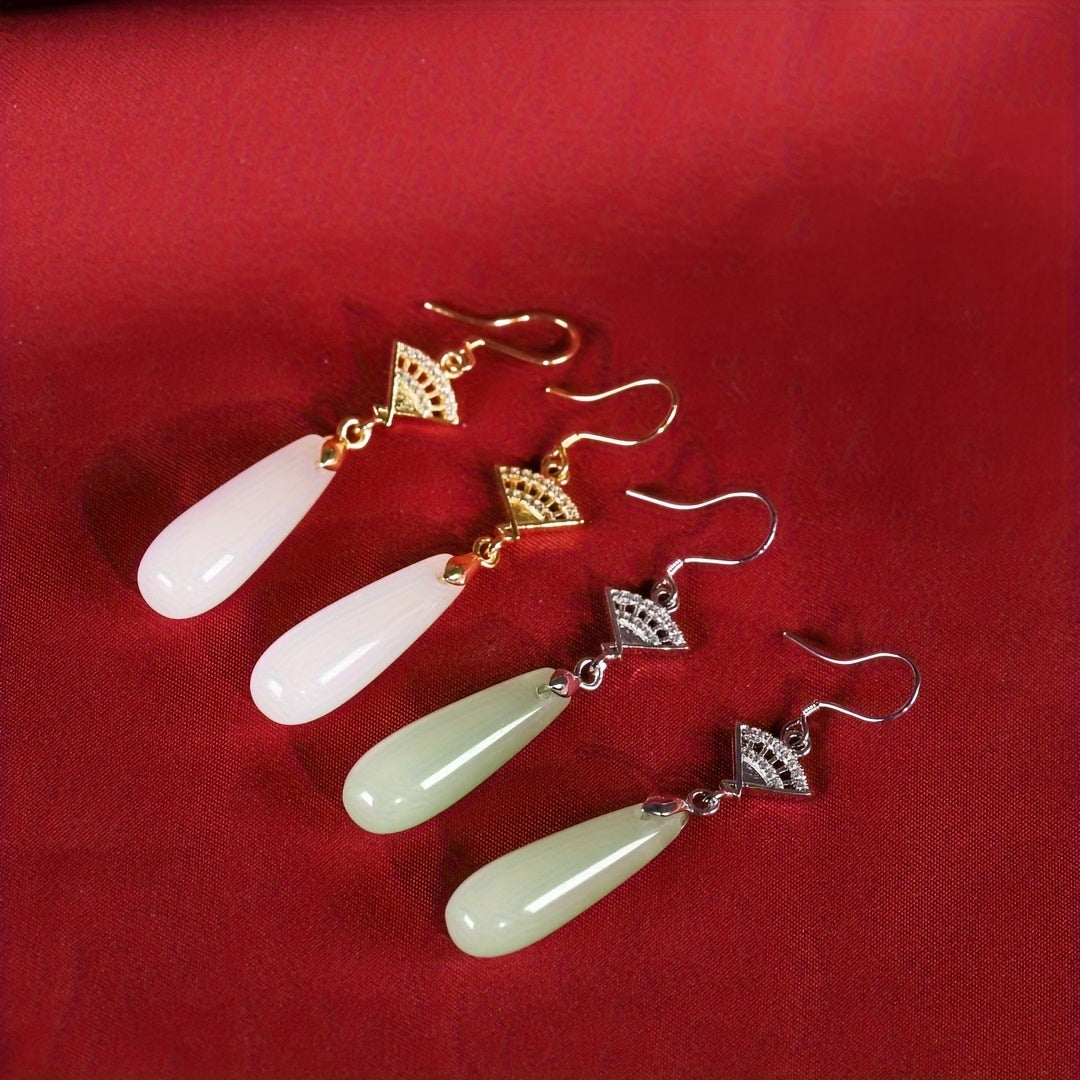
A companion for the questions, not just the answers.
View the Jewelry Piece →