





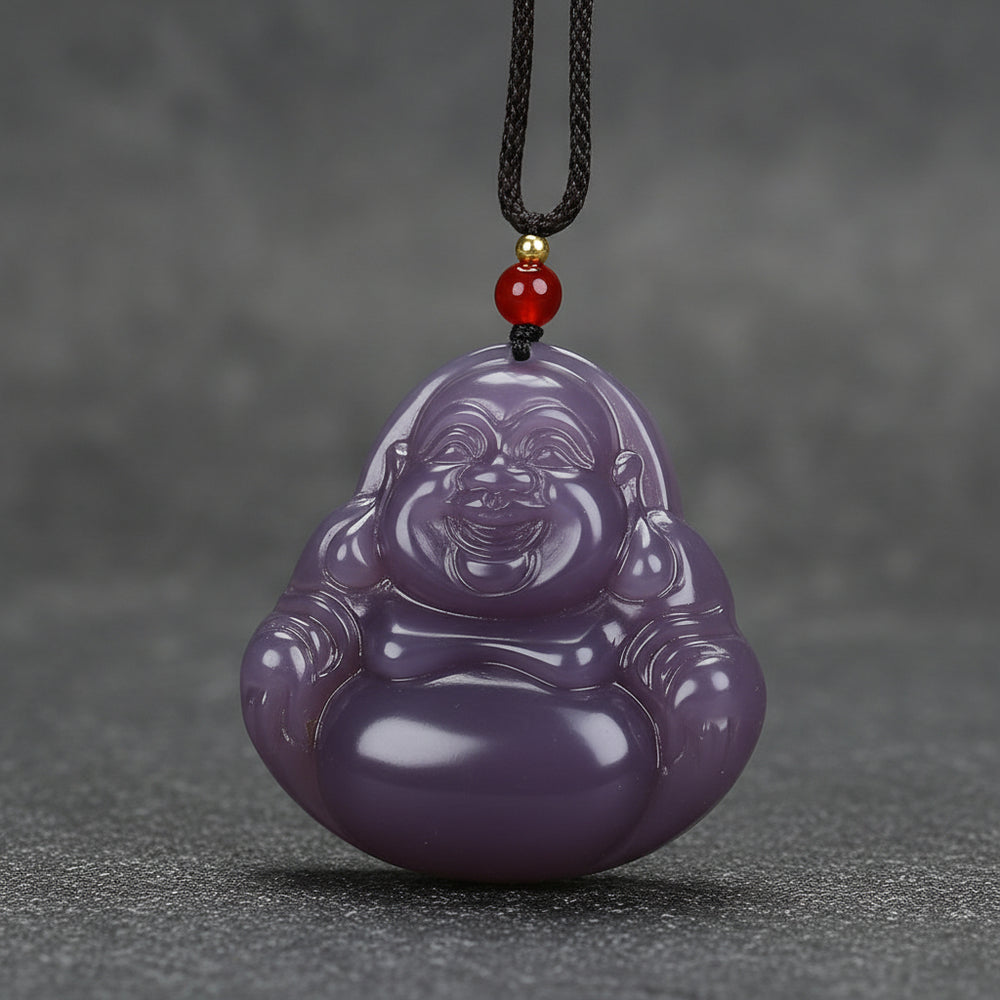
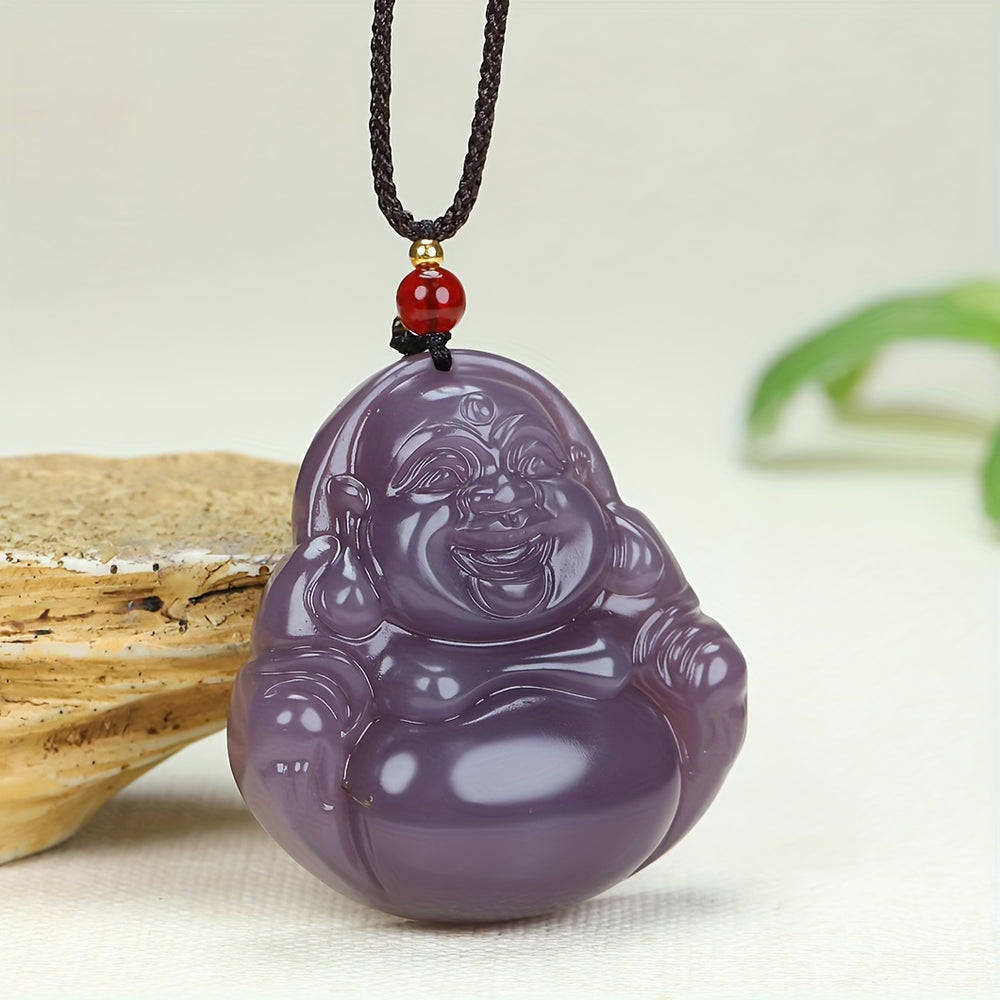
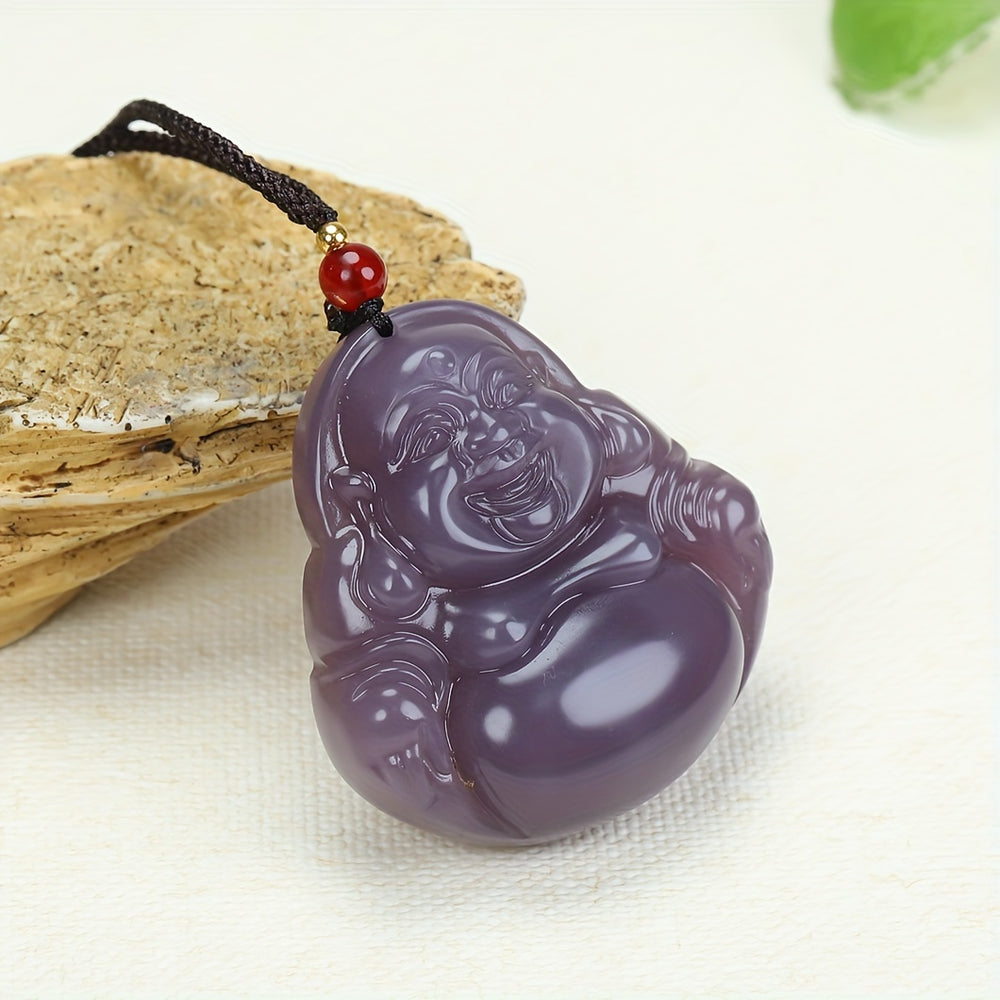
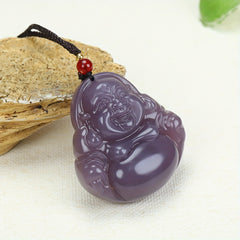
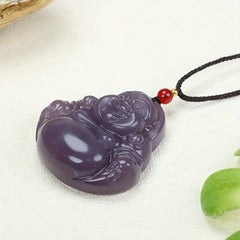
Imitation Jade Purple Character Pendant — Symbol of Inner Renewal and Inherited Wisdom
01 Imitation Jade Purple Character Pendant — Symbol of Inner Renewal and Inherited Wisdom A carved pendant for those who carry meaning privately, honoring the quiet transmission...
- $23.25
$49.25- $23.25
- Unit price
- per
Please hurry! Only 66 left in stock
Limited-Time Offers, End in:
151D
8H
23M
0S
Subtotal:
$23.25
Couldn't load pickup availability


01
A carved pendant for those who carry meaning privately, honoring the quiet transmission of insight across time without needing to announce it
Imitation Jade Purple Character Pendant — Symbol of Inner Renewal and Inherited Wisdom
Archetype
The Keeper — one who holds symbols as private anchors rather than public signals. This archetype understands that the most meaningful objects are those worn for oneself, functioning as daily reminders in an internal dialogue that doesn't require external validation.
The KeeperCore Themes
Cultural continuity, accessible symbolism, the transmission of wisdom across generations, and the practice of renewal as maintenance rather than transformation. This pendant embodies inherited meaning made accessible, honoring tradition while remaining available for daily use.
Cultural Continuity Accessible WisdomLife Stage
For moments when you recognize that wisdom isn't something you achieve once but something you renew daily. A companion for those who understand that growth is cyclical—returning to foundational truths rather than constantly seeking new ones.
Daily RenewalElemental Essence
Purple stone embodies the liminal—neither warm nor cool, neither advancing nor receding. It represents the transitional space where observation happens before action, the pause between stimulus and response where wisdom actually lives.
Liminal SpacePrimary Use
Worn as a tactile anchor for present-moment awareness. A touchpoint during decision-making, a physical reminder when automatic reactions arise, a constant presence that invites the wearer to pause and notice rather than rush and react.
Tactile ReminderSpiritual Positioning
Not a talisman for protection or luck, but a functional tool for attention — an object that supports the daily practice of staying conscious in your own life, honoring the ongoing work of renewal without promising transformation.
Functional Awareness
02
Before You Continue
This pendant is not designed for those seeking mystical guarantees or spiritual shortcuts. It will not bring you luck, protect you from harm, or transform your life through its mere presence.
If you expect objects to do the work of awareness for you, this carved character will feel disappointingly inert. If you need constant novelty or aesthetic variety, its unchanging form will become invisible within days.
It belongs to those who understand that renewal is not a dramatic event but a daily returning — to presence, to intention, to the person you're capable of being when you're not too distracted to notice.
03
The Language Made Physical
Writing systems emerged to preserve knowledge across time and distance. But written texts require deliberate engagement—you must stop, read, focus. The carved character pendant solves a different problem: how to keep wisdom accessible during the uninterrupted flow of daily life.
In traditional Chinese practice, characters weren't only read—they were worn. Scholars carried seal stamps. Merchants wore protective inscriptions. Families passed down carved jade with ancestral names. This wasn't superstition. It was pragmatic psychology: the physical presence of language creates involuntary reminders.
When you wear a character against your skin, your nervous system registers it constantly. Most of this registration happens below conscious awareness—until your hand reaches for the pendant during stress, or you catch sight of it in peripheral vision during a difficult conversation. In those moments, the carved symbol interrupts automatic patterns, creating space for conscious choice.
The character here represents renewal and wisdom—not as abstract concepts but as practiced capacities. Wisdom as the ability to observe your own mind without being trapped by its first reaction. Renewal as the daily returning to presence after inevitable distraction. These aren't mystical qualities. They're trainable skills, and the pendant functions as training equipment.
04
Material Truth: What Imitation Means
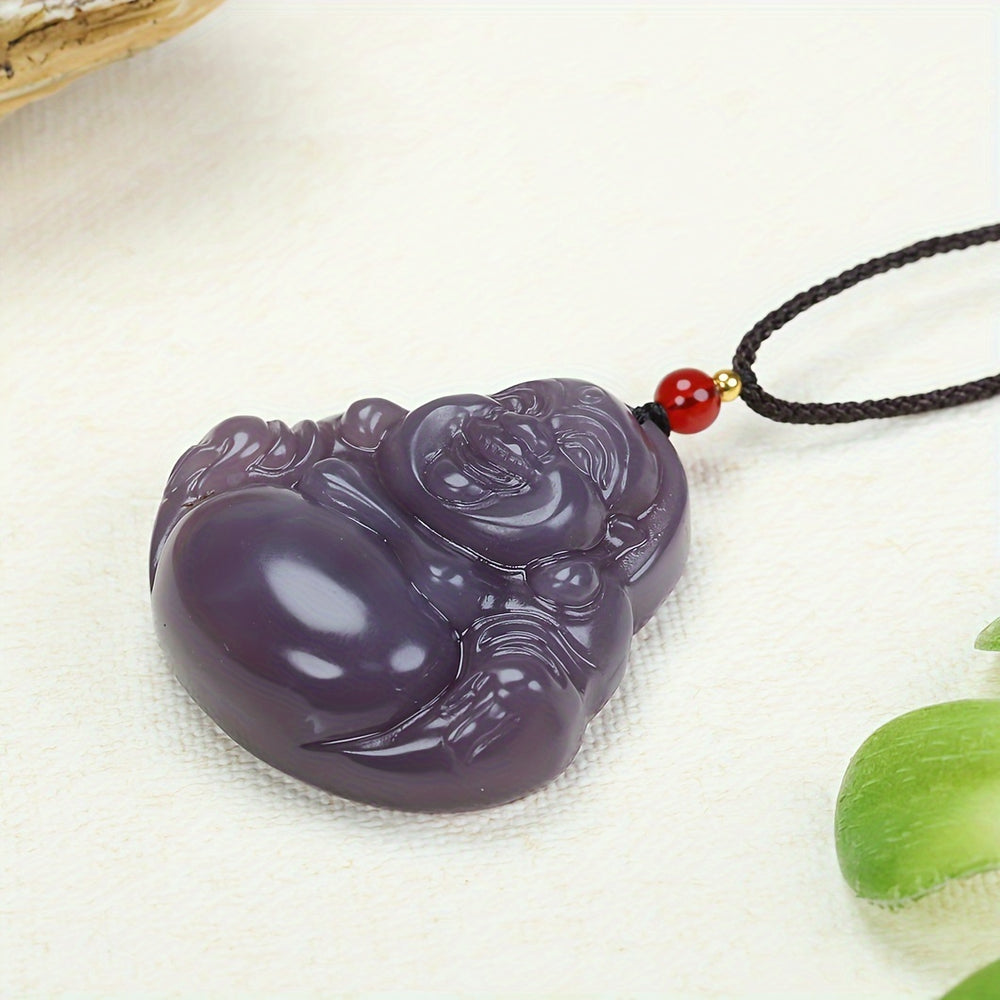
This pendant is crafted from imitation jade—treated stone or composite material that mimics jade's appearance and weight without its geological rarity or price point. This choice is intentional, not apologetic.
Traditional jade has been culturally significant for millennia, but its scarcity made it accessible only to the wealthy. Symbolic practice became gatekept by economics. Imitation materials democratize access to the symbol without diluting its function. The character doesn't need rare stone to work—it needs consistent presence.
Imitation jade allows daily wear without anxiety. You can take it into situations where expensive jewelry would be a liability. You can wear it to sleep, to work, through the messy and mundane moments where you actually need its reminder. This functional accessibility deepens the symbolic relationship rather than cheapening it.
Over time, the material develops a subtle patina—evidence of the relationship between object and wearer. This temporal vulnerability mirrors the practice itself: neither you nor the pendant remain unchanged. Both carry forward the accumulated context of use, becoming irreplaceable not through intrinsic value but through shared history.
05
Design Philosophy: Restraint as Respect
The pendant's design follows traditional carving patterns—raised relief, careful attention to stroke order, deliberate negative space. These aren't decorative choices. They're functional ones.
The raised character creates tactile distinction. When your thumb moves across the surface, you feel the carved strokes as texture. This tactile feedback registers even when you're not consciously attending to it, making the pendant more effective as a reminder tool than a flat engraving would be.
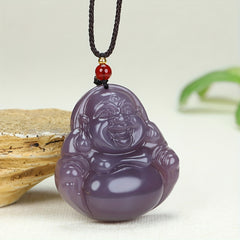
The purple color occupies psychological middle ground—neither overtly spiritual nor strictly secular. It reads as intentional without being loud, allowing the pendant to function across different contexts. You can wear it to a corporate meeting or a meditation session with equal appropriateness.
The proportions are scaled for everyday wear—substantial enough to register against your body, light enough not to become burdensome during extended wear. This balance matters because the pendant only works if you actually wear it. Symbolic objects that sit in drawers because they're impractical serve no one.
What's absent is equally important: no embellishment, no additional symbols, no attempt to amplify the character's meaning through decoration. The restraint demonstrates trust in the symbol's sufficiency. It doesn't need enhancement. It needs consistent, patient engagement.
06
Wearing & Relation: The Temporal Dimension
The first week, you notice the pendant constantly. Its presence is novel, slightly intrusive. Your body hasn't adapted yet. This initial phase is useful—the heightened awareness creates opportunities to establish intentional use patterns.
By the second week, sensory habituation begins. The pendant becomes background. You forget you're wearing it for hours at a time. This feels like failure but isn't. It's necessary integration. The goal isn't constant conscious awareness of the object but availability when needed.
After a month, the pattern stabilizes. Your hand reaches for the pendant during specific situations: decision points, moments of stress, conversations that require careful listening. These reaches become semi-automatic—your nervous system has learned to associate the tactile sensation with a particular mental state.
Over years, the pendant accumulates context. It was present during the difficult conversation with your parent. It rested against your chest during the decision you agonized over for weeks. It became the thing your fingers found while waiting for news. These layers of personal history transform it from a generic symbol into an irreplaceable companion.
This is renewal as lived experience—not dramatic transformation but daily maintenance of awareness. Each time you touch the pendant and remember its function, you're renewing your commitment to presence. Not achieving presence permanently, but choosing it again, in this moment, despite everything pulling you toward distraction.
07
Specifications
- Material: Imitation Jade (Treated Stone / Composite), Purple Tone
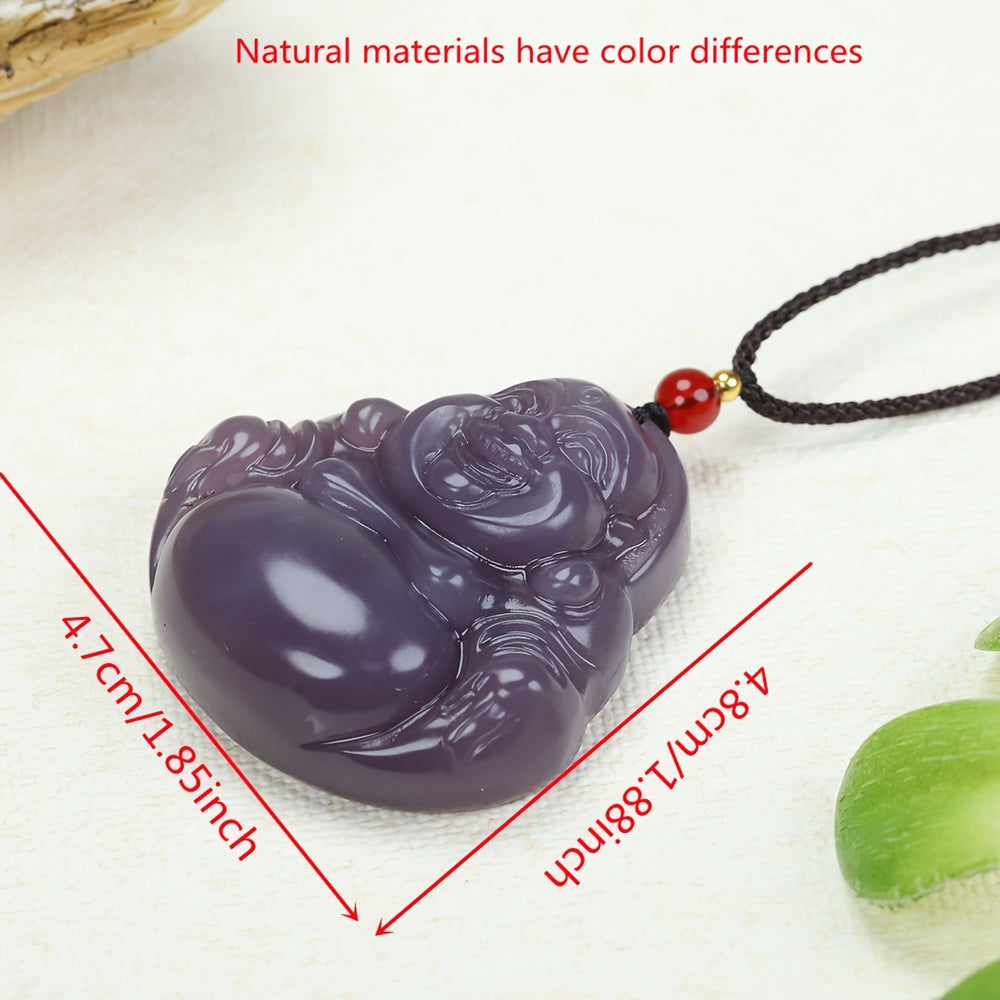
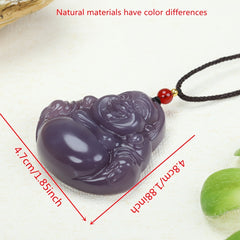
- Dimensions: Approximately 4.7 cm × 4.8 cm / 1.85 × 1.88 inches
- Thickness: Approximately 1.2 cm / 0.47 inches
- Weight: Approximately 35-45 grams
- Cord: Adjustable black braided cord with accent bead
- Craftsmanship: Relief-carved character, hand-finished edges
- Care: Clean with soft cloth, avoid harsh chemicals, store away from direct sunlight
Note: Natural variation in purple tone and subtle surface texture is expected in imitation jade materials. Each piece carries unique characteristics.
08
Darhai Inner Library
Sacred Symbology · The Character as Keeper
— How ancient carved characters transformed from sacred texts into personal talismans, carrying meaning across generations without needing constant explanation or validation.
Material Souls · The Weight of Purple Stone
— Exploring the quiet dignity of imitation materials and how accessibility reshapes our relationship with symbolic objects, making practice available rather than aspirational.
Archetypes · The Keeper
— Understanding the personality drawn to quiet inheritance and subtle symbols, those who hold cultural memory privately and value depth over display.
Practice · Noticing Renewal
— A verifiable exercise in observing subtle shifts in perspective, using physical reminders to cultivate awareness of ongoing personal evolution without requiring transformation.
Seeker's Dialogue · Wearing Inherited Symbols
— What does it mean to wear a character you didn't invent? A reflection on inheritance, interpretation, and the courage to carry forward cultural meaning with appropriate respect.
Compare color
Recently Viewed Products
Example product title
- $23.25
$49.25- $23.25
- Unit price
- per
Example product title
- $23.25
$49.25- $23.25
- Unit price
- per
Example product title
- $23.25
$49.25- $23.25
- Unit price
- per
Example product title
- $23.25
$49.25- $23.25
- Unit price
- per
Example product title
- $23.25
$49.25- $23.25
- Unit price
- per
Example product title
- $23.25
$49.25- $23.25
- Unit price
- per
Example product title
- $23.25
$49.25- $23.25
- Unit price
- per
Example product title
- $23.25
$49.25- $23.25
- Unit price
- per
Example product title
- $23.25
$49.25- $23.25
- Unit price
- per
Example product title
- $23.25
$49.25- $23.25
- Unit price
- per
- Choosing a selection results in a full page refresh.
